Eberswalde
Rolling mill, dormitory, town. The everyday life of some 90 men from Mozambique, 1987 to 1990.

The pictures get their story back
This is where the pictures were taken: in the dormitory on Leninstraße, in town, at parties and on outings, hardly ever at the workplace. This page puts them back into their context. What they show is being filled in today by the men in Maputo who appear in them.

1987, Schönefeld Airport
Those who arrived back then are getting in touch today from Maputo.
On to Maputo ↗
Maputo · Base Camp Germany
From January 1987, some 90 young men from Mozambique landed at Schönefeld in several groups, the last of them in October 1988. Their destination was VEB Walzwerk Eberswalde-Finow, a heavy industry plant. The basis was the state treaty between the GDR and Mozambique of February 24, 1979. The GDR recruited the workers to make up for the labor shortage in its industry. Officially there was talk of training and solidarity; in reality, shift work at the rolling lines awaited them.
The contracts usually ran for four or five years. Between 25 and 60 percent of wages were withheld and used to offset debts between the two states. They were supposed to be paid out in Mozambique after the men returned. In November 1989 at least 251 Mozambican workers were registered in Eberswalde, spread across several companies, plus a group from Angola.


The company file
What the file records in figures, the photographs in the archive show.
To the collection ↗
Archive · Dormitory, parties, journey home
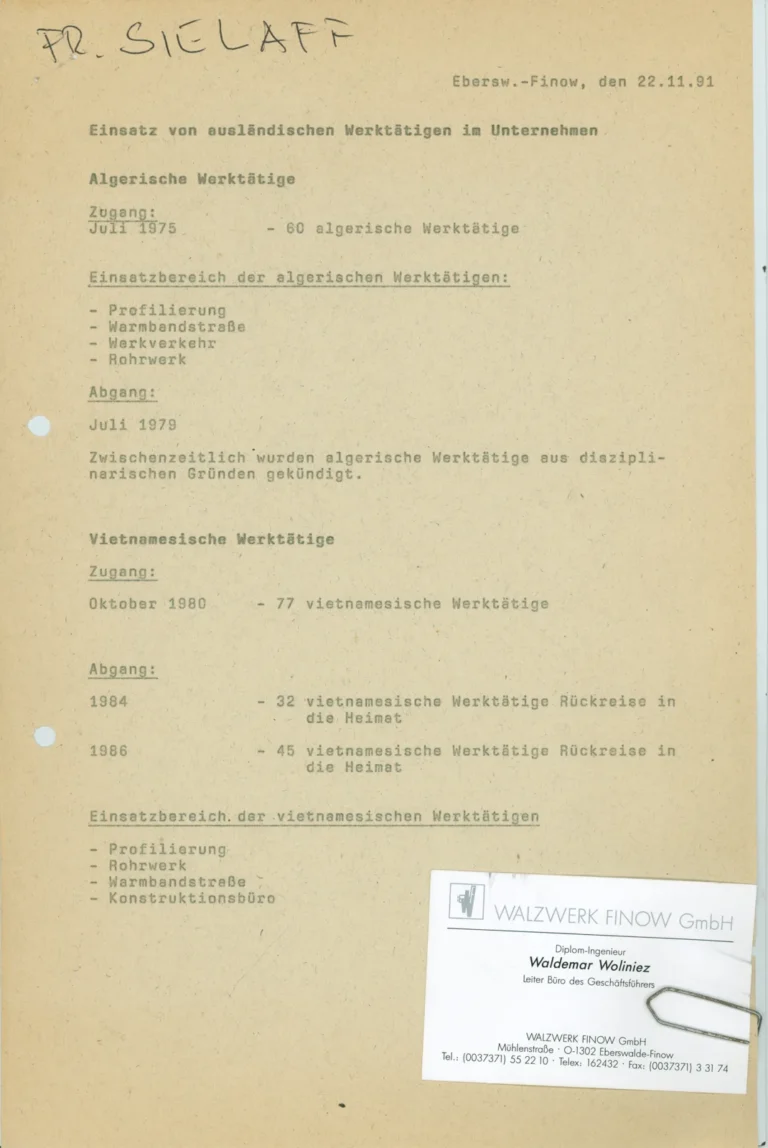
On November 22, 1991, Walzwerk Eberswalde-Finow GmbH listed on two typewritten pages which foreign workers had worked at the plant in previous years. This document is where the research began.
It names 60 Algerian workers from July 1975 to July 1979 and 77 Vietnamese workers from October 1980 on, who returned home in 1984 and 1986. For Mozambique it records the period from November 1986 to July 1990, based on the government agreement between the GDR and the People’s Republic of Mozambique.
101
arrivals from Mozambique between November 1986 and October 1988
16
departures before the summer of 1990
83
dismissals with notice effective July 30, 1990
90
Mozambicans at the rolling mill according to the district office of the People’s Police, as of November 7, 1989
Arrivals according to the company file
before 11/30/1986
2 workers
group leaders and interpreters, official advance party
11/30/1986
26 workers
according to the file; according to eyewitnesses, part of the advance party
1/3/1987
20 workers
1/17/1987
5 workers
2/21/1988
19 workers
10/2/1988
10 workers
10/8/1988
19 workers
one of them from Lengefeld
Departures and assignments
Before the summer of 1990, 16 men left the plant: nine for family reasons, three because they were transferred to another company, three for “violating the norms of social coexistence,” and one was imprisoned in 1989. For the remaining 83, the contracts ended with their dismissal effective July 30, 1990.
The Mozambican workers were mainly employed in the tube mill, the profiling mill, consumer goods production and hot strip production, and in maintenance.
Context
In November 1986 the official advance party arrived in Eberswalde first: group leaders, interpreters and escorts. The first workers came in 1987. Christian Fenger began taking photographs in January 1987 as their supervisor at the plant.
Between arrivals and departures there is a difference of two people. The most likely explanation is in the list itself: two men came to the plant as group leaders and interpreters even before November 30, 1986. They were not among the production workers and are not listed separately among the departures.

Rolling mill, dormitory, street
The drone footage shows the places as they look today. Christian Fenger’s photographs show them as the Mozambican workers experienced them from 1987 to 1990.
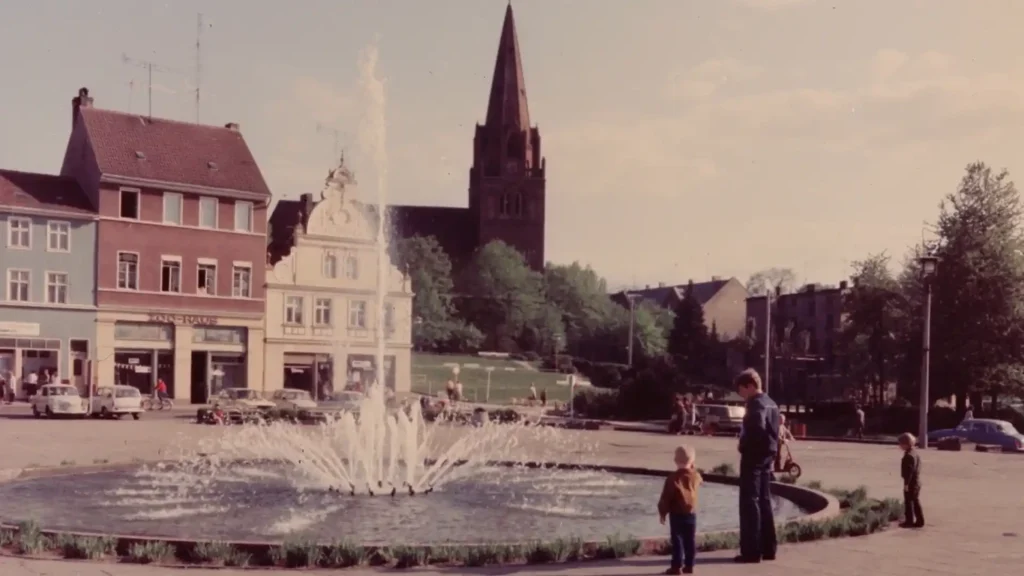

VEB Walzwerk Eberswalde-Finow
The rolling mill in Finow belonged to the “Hermann Matern” strip steel combine and employed some 2,300 people at the end of the 1980s. It rolled bar steel, hot strip and precision steel tubes. Finow was the largest producer of light steel sections in the GDR.
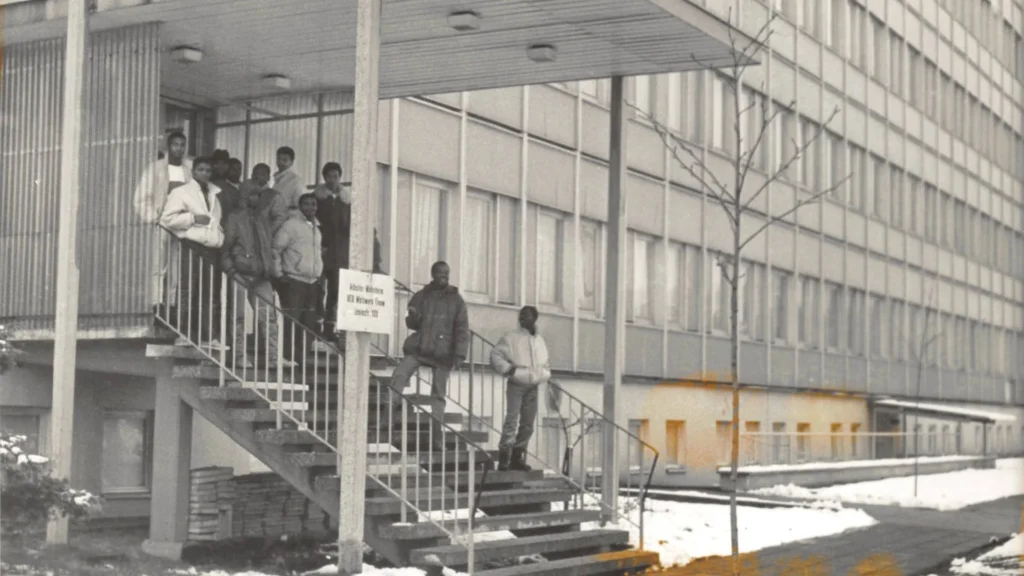
The men from Mozambique lived in the rolling mill’s workers’ dormitory at Leninstraße 108, today’s Friedrich Ebert Straße. A company bus took them to their shifts. Christian Fenger, a skilled steel forming worker, was employed at the plant as a quality inspector and at the same time was the group’s supervisor. In January 1987 he began photographing the men.
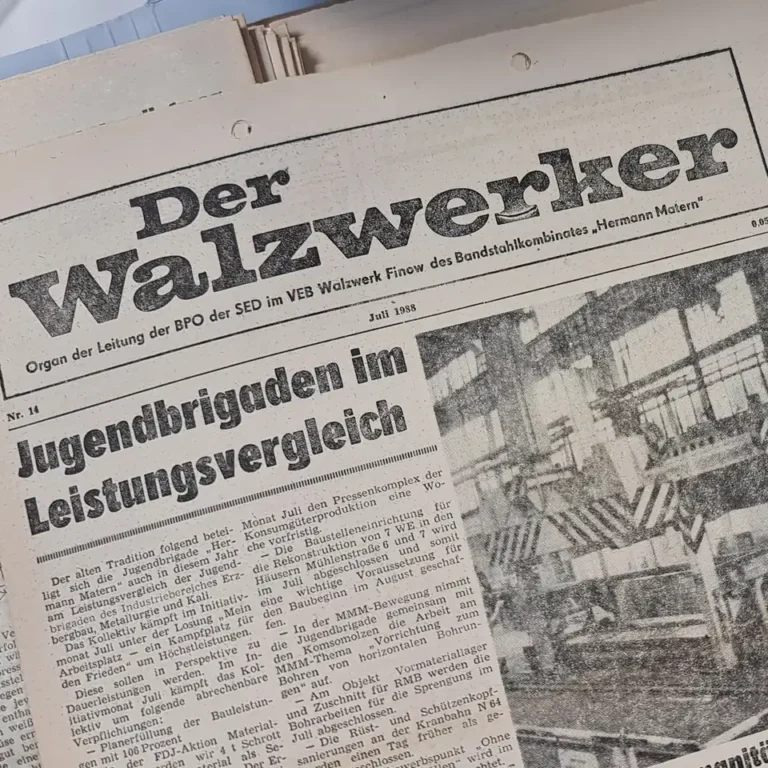
The plant newspaper “Der Walzwerker” was published as the organ of the SED party leadership at the plant. In February 1989, three months before the local elections of May 7, in which foreign workers were allowed to vote for the first time, it profiled a member of the district council under the headline “Examined and found worthy.”


“Gleisanlagen freigelegt” (Tracks uncovered): article by Christian Fenger in the plant newspaper “Der Walzwerker” about a work assignment by FDJ members and colleagues from Mozambique.
Between shift and after hours
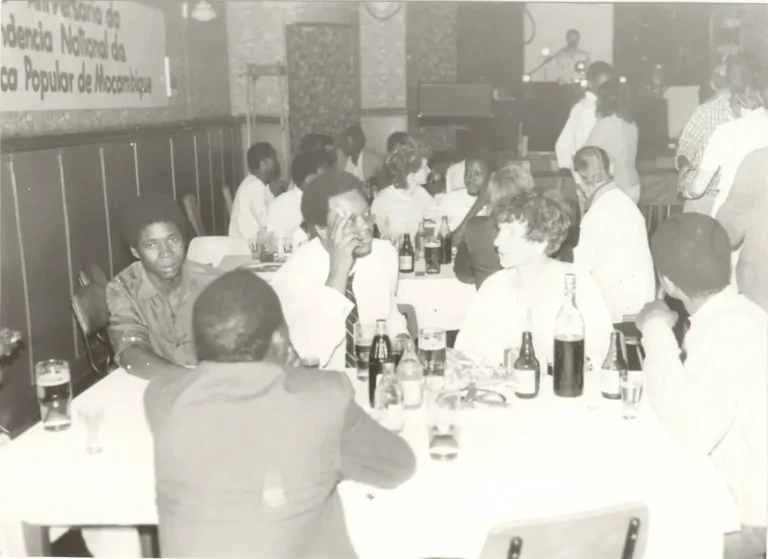
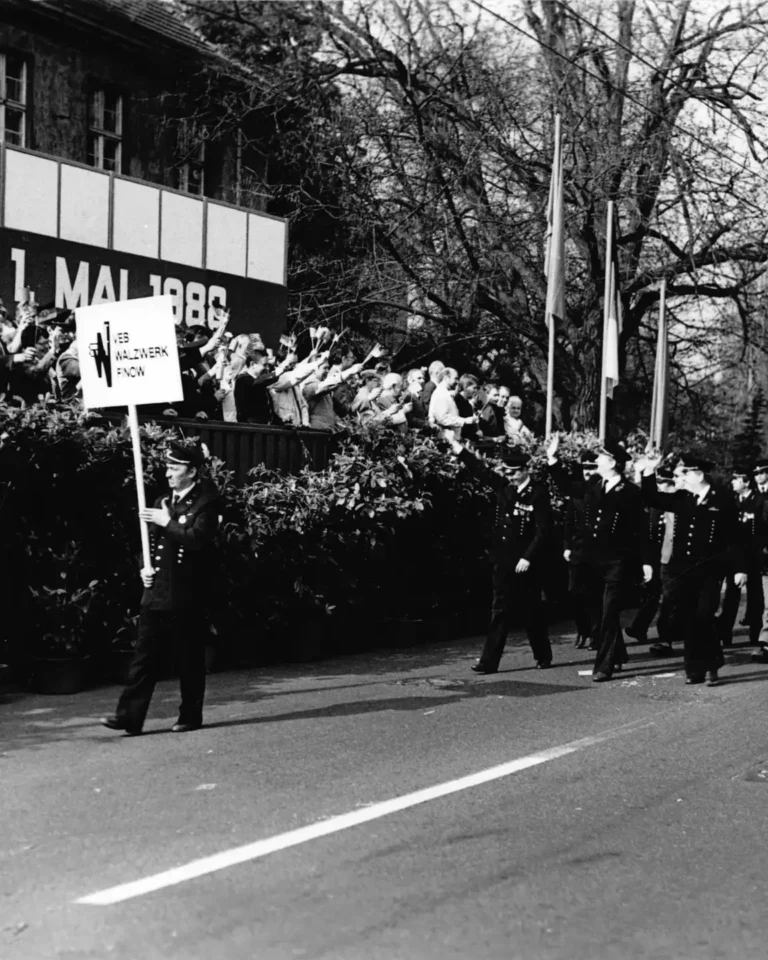
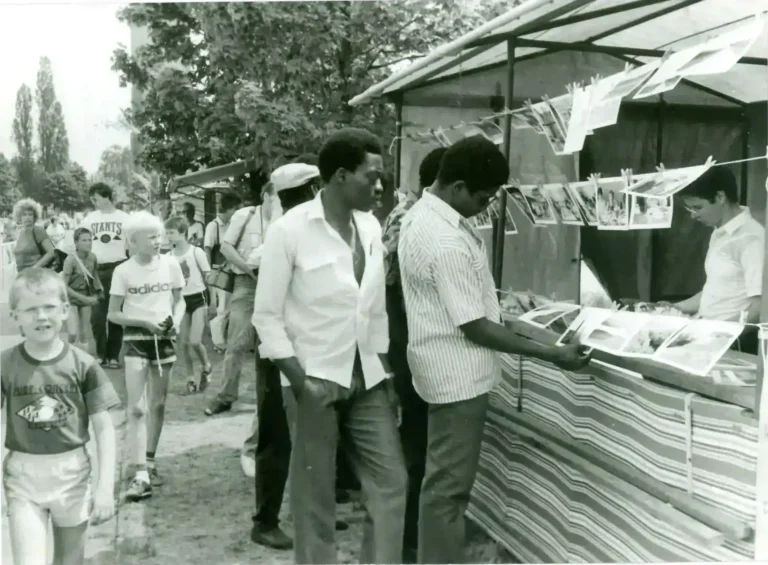
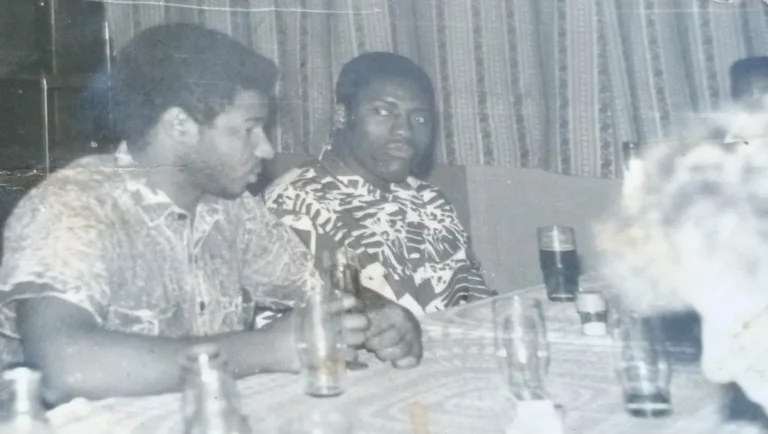
Christian Fenger photographed the men where the plant did not need them: on the steps in front of the dormitory, playing soccer, at parties and at the rolling mill festival, where a stand showed his pictures. What emerged was not a company archive but an album of everyday life.

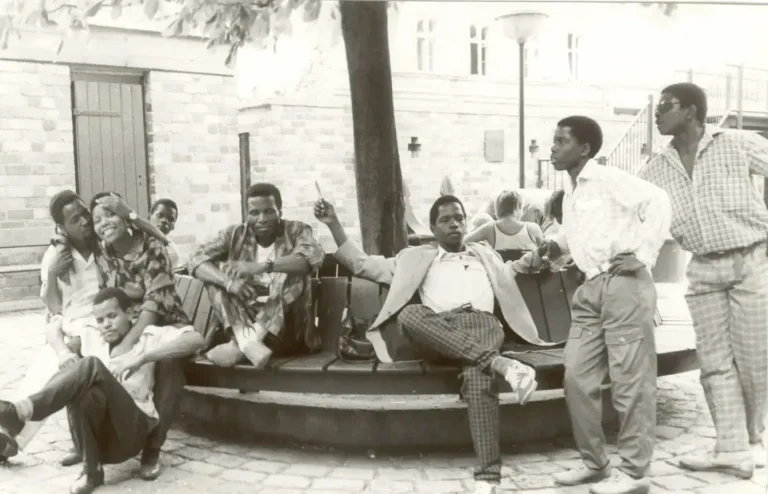



Life in the dormitory
The men lived in the company-owned dormitory on Leninstraße. The Kulturbund photo club ran a darkroom there, where Christian Fenger regularly developed his films and made his prints. His pictures show cooking, celebrating, listening to music and taking photographs. At the same time, life in the dormitory was regulated: visits were restricted, and there was no provision for a right to stay or for family reunification. When their contracts expired, the men were supposed to return.

The only election
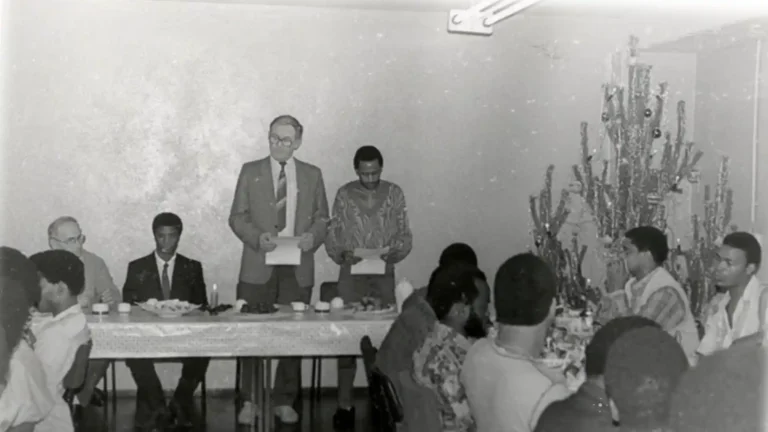
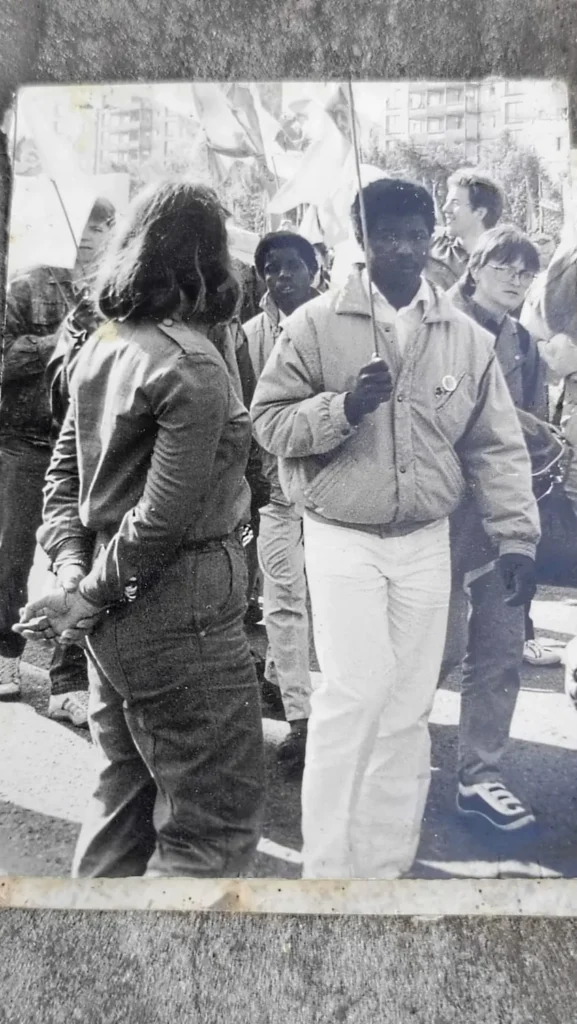
For four decades, foreign workers in the GDR had no political right to vote. Only on March 3, 1989, did the People’s Chamber grant them the right to vote and to stand for office at the local level. The only election in which they took part was held on May 7, 1989, and was marked by massive rigging by the state. Many were taken to the polls in an organized way through their company and dormitory. With reunification, this right expired again for people from countries outside the EU.
Agostinho S., in Eberswalde at the time, kept photos from this period and made them available to the project.

“These are historical facts.”
Agostinho S., former worker in Eberswalde, 2026
1990, the end of the contracts
With the end of the GDR, the contracts were terminated early. For the men at the Eberswalde-Finow rolling mill, they ended with their dismissal effective July 30, 1990. Many thereby lost their jobs and at the same time their place in the dormitory, as well as up to two years of income, in addition to the portions of their wages already withheld. For an early return they were promised a free flight home and 3,000 Deutsche Mark in West German currency. In the summer of 1990 the men built wooden crates in front of the dormitory in Eberswalde, packed their household goods and loaded everything into shipping containers. Then they waited for the journey back to Mozambique.
Those who wanted to stay found themselves in an uncertain position with German reunification in October 1990: West German law on foreigners was applied to the former GDR without adjustment, residence was temporary and there was no long-term prospect of staying. The formal possibility of staying was of little help without work, housing and a secure livelihood.
Personal ties and relationships gave some people support and made it easier to stay. For many others, returning to Mozambique remained a decision made under considerable pressure.


The flight back via Schönefeld and Tegel
In early September 1990, the first men of the Eberswalde group flew back via Schönefeld and Tegel to Mozambique, where civil war was still raging. Christian Fenger accompanied the men to the airport.

The night of November 24 to 25, 1990
That night, 50 to 60 young men and women from the far-right and heavy metal scenes roamed through Eberswalde. They were deliberately looking for Black people. Outside the chemical factory they came across a group of African men: the Angolan Amadeu Antonio and two men from Mozambique. Amadeu Antonio was beaten to death. The two Mozambicans survived with severe injuries.
Amadeu Antonio Kiowa was 28 years old. He had come to the GDR from Angola in 1987 and worked at the slaughtering and meat processing combine (SVKE) in Eberswalde-Britz. He is considered one of the first people killed by racist violence after German reunification. The Mozambicans this website is about, by contrast, worked at VEB Walzwerk Eberswalde-Finow. In the memory of that night, they are still barely visible today.
Chronology of the night
The sequence of events follows the final judgment of the District Court of Frankfurt (Oder) of September 14, 1992, and the trial reports of the taz newspaper.
50 to 60
people marching from the Rockbahnhof to the Hüttengasthof
12:30 a.m.
attack outside the gatehouse of the chemical factory
20
police officers in full gear nearby, without intervening
12/6/1990
Amadeu Antonio dies without regaining consciousness
Nov. 24, afternoon
Meeting
Young people from Eberswalde and from Gartz and Casekow meet in the apartment of a right-wing skinhead known throughout the town. There is drinking. They decide to go together that evening to the Rockbahnhof disco on Bahnhofstraße.
around midnight
The march
50 to 60 people leave the Rockbahnhof and form a column heading toward the Hüttengasthof, the disco that Africans also go to. At the front, one of them randomly smashes car windows with an aluminum baseball bat. According to the taz, around midnight the police tell the owner of the Hüttengasthof to close and send his guests home.
around 12:30 a.m.
The attack
Near the gatehouse of the chemical factory, the front of the column spots the African men. A racist shout, then the attack. One of the men is hit on the head with the baseball bat and drops to his knees. The two Mozambicans are badly wounded with knives and manage to escape.
shortly afterward
Amadeu Antonio
Amadeu Antonio flees across the street and runs straight into one of the attackers. Five to ten people chase him and surround him in front of the main entrance of the chemical factory. They beat and kick him, even as he lies motionless on the ground.
after 1:00 a.m.
Gatehouse
The gatekeeper and two plainclothes officers carry the badly injured man into the gatehouse and lay him on a jacket. An emergency doctor takes the unconscious, hypothermic man to the hospital in Eberswalde. In Berlin-Buch, a brain contusion is diagnosed.
12/6/1990
Death
Amadeu Antonio dies in intensive care of multiple organ failure as a result of his head injuries. He leaves behind his girlfriend and a child.
Hüttengasthof
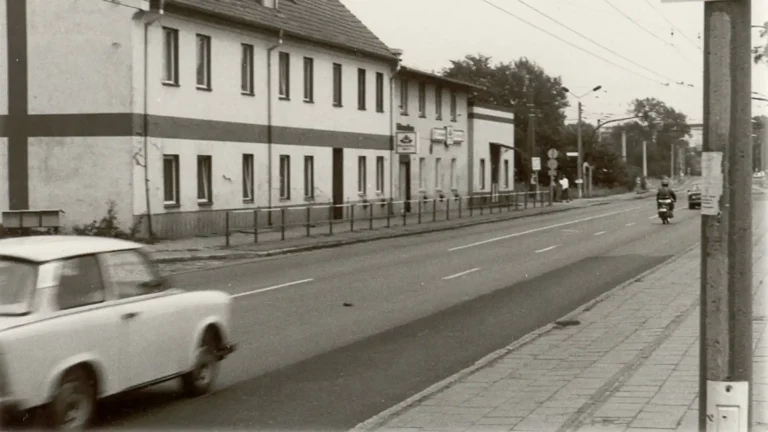
Hüttengasthof, Eberswalde, 1991. Photo: Thomas Balzer
The police knew the group was on the move. Some twenty officers in full gear stood ready on both sides of the Hüttengasthof, at a safe distance, as the taz reported in 1992. Three armed plainclothes officers accompanied the march and did not intervene. One of them later said he had held back so as not to get into trouble with the group.
During the trial, the presiding judge stated that it was in the air that the police had failed. This had no consequences for the officers.
A farewell party at the Hüttengasthof, Eberswalde 1990
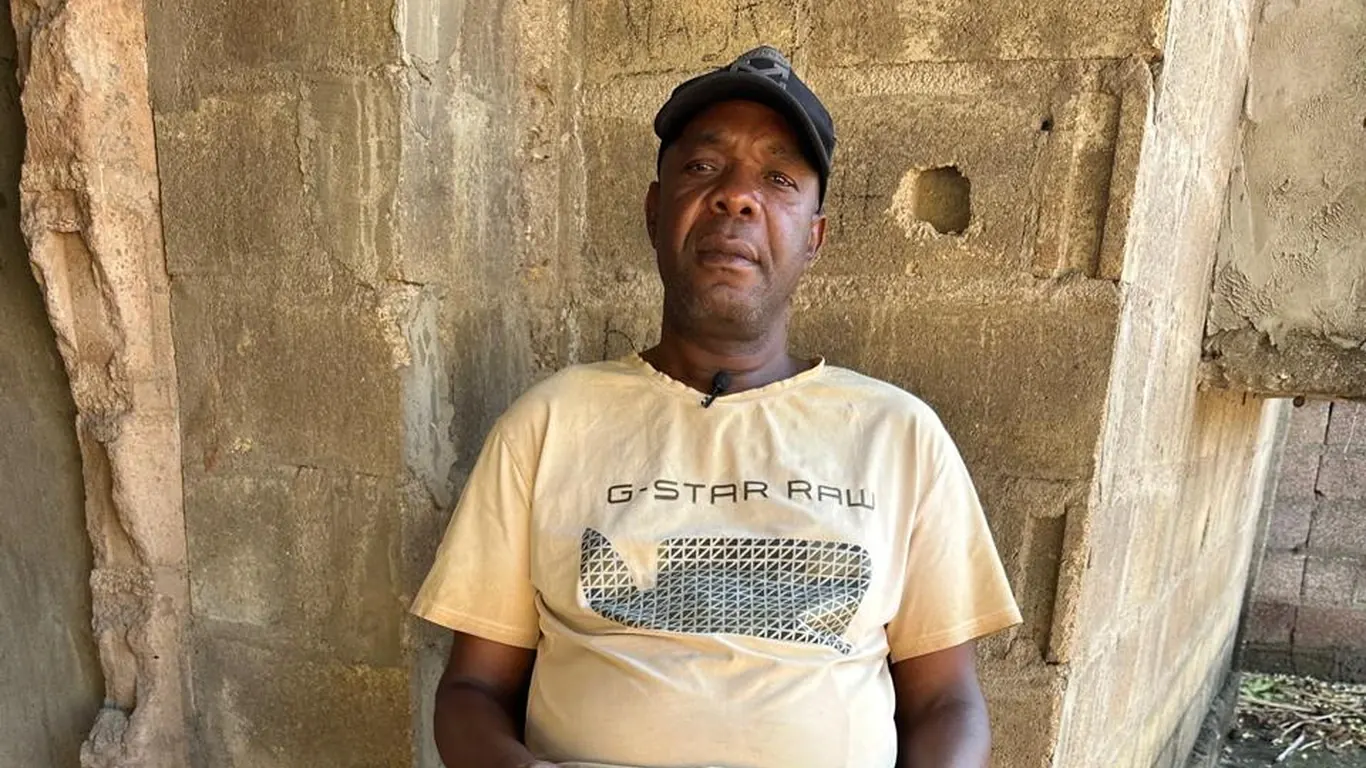
The two Mozambican men who were attacked that night appear in the reports almost only as marginal figures. One of them is Francisco Armando Mondlane. He survived with the most severe injuries, spent a month in the hospital and was then flown out to Mozambique. On April 26, 2026, he told Stélio Guibunda in Maputo about that night. He says the evening had been planned as a joint farewell party from Eberswalde.
The contracts of the Mozambicans at the Eberswalde-Finow rolling mill had been terminated effective July 30, 1990. Anyone still in Eberswalde in the fall faced the journey back: without work, without protection, a few weeks after the Unification Treaty. After the attack, foreign workers organized shared trips to protect one another. Christian Fenger photographed this time.

Francisco Armando Mondlane
Eyewitness. Survived the attack on November 25, 1990, with the most severe injuries. Interview in Maputo on April 26, 2026, video coming soon.
Trial and verdict
“We have been here for five years, but people still see us as strangers. That hurts us. Since reunification, the hatred has gotten worse.”
An African man from Eberswalde, speech at the rally against racism on August 19, 1992. Fearing further attacks, he remained anonymous.
The trial of five young men took place in 1992 in Eberswalde’s town hall. The charge was not murder but dangerous bodily harm resulting in death. On September 14, 1992, the District Court of Frankfurt (Oder) sentenced the five to no more than four years in prison, some of them suspended. Francisco Armando Mondlane, who had survived the night with the most severe injuries, was not summoned to the trial.
Sources: Judgment of the District Court of Frankfurt (Oder) of September 14, 1992, case no. 25 KLs 9/92, quoted from the criminal complaint filed by the Antirassistische Initiative, December 1993; taz, Bascha Mika, July 1992; Aktionsbündnis Brandenburg; Amadeu Antonio Foundation.
Companions and eyewitnesses

A worker from the Eberswalde rolling mill gets in touch from Maputo
The Madgermanes meet in a park in downtown Maputo called “Base Camp Germany.” There, from 2010 onwards, Jason Byrne and Helge Elisabeth Zeitler interviewed returnees for his short film, released in 2014, among them Arnaldo Soares Mendes, who had worked at the Eberswalde-Finow rolling mill.
For this project, the 2014 film was the initial spark, even before the launch of the Instagram channel in February 2022, through which José Mafueca was recognized in one of the pictures. Since then it has been clear: Fenger’s photographs should not stay in the archive, nor hang without names on a museum wall. They belong back with the people who appear in them.
On to Maputo ↗
Andreas Mroß, founder of the Eberswalde photo club
Andreas Mroß founded the Kulturbund photo club in Eberswalde, of which Christian Fenger was also a member. In the GDR, photo clubs were not a private initiative: they were founded under the umbrella of the GDR’s Kulturbund, supported by the state and supplied with materials by the Kulturbund. In the basement of the dormitory for Angolan and Mozambican workers on Leninstraße, the photo club ran a darkroom. Fenger and Andreas Mroß used it together, and two other photographers worked there as well.
Andreas Mroß did not take photographs at the rolling mill, but at Kranbau Eberswalde, the crane works, where Mozambicans also worked. He did not, however, have the same close access to the men as Fenger. Fenger looked after the group and shared in their everyday lives. Andreas Mroß saw them mostly at work.
Two photographers, one darkroom.
Christian Fenger off shift.
Andreas Mroß at the crane works.

Kranbau Eberswalde. Photo: Andreas Mroß

Meeting at Kranbau Eberswalde. Photo: Andreas Mroß
In the interview, Andreas Mroß talks about the shared darkroom, about working at the crane works and about how differently the two photographers worked. He himself took a more artistic approach, kept his distance and stuck to the state’s ideas of how work was supposed to look in pictures. Christian Fenger, by contrast, did not photograph the Mozambican workers at work but followed their everyday lives outside the factory gates, directly and candidly, raw, energetic and without embellishment.

May 2022: Andreas Mroß documents the demolition of the African workers’ dormitory in Eberswalde.

Demolition of the African workers’ dormitory, Eberswalde. Image source: screenshot, 2022 shoot
The photographs
All pictures from Eberswalde, organized by themes such as dormitory, leisure time, portraits and the journey home.