Invited and Forgotten
An open archive in the making
Christian Fenger’s photographs from Eberswalde, 1987 to 1990
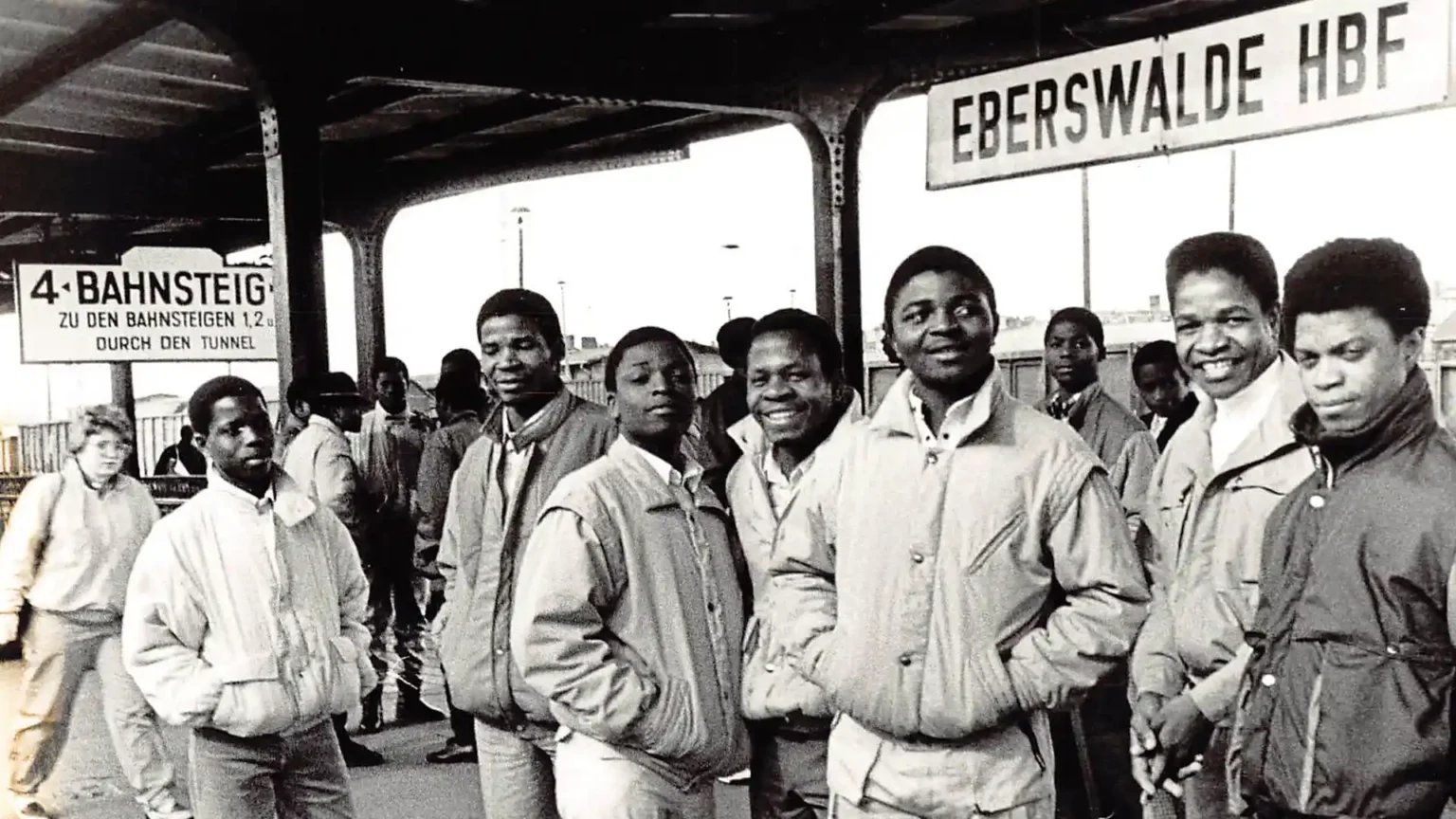
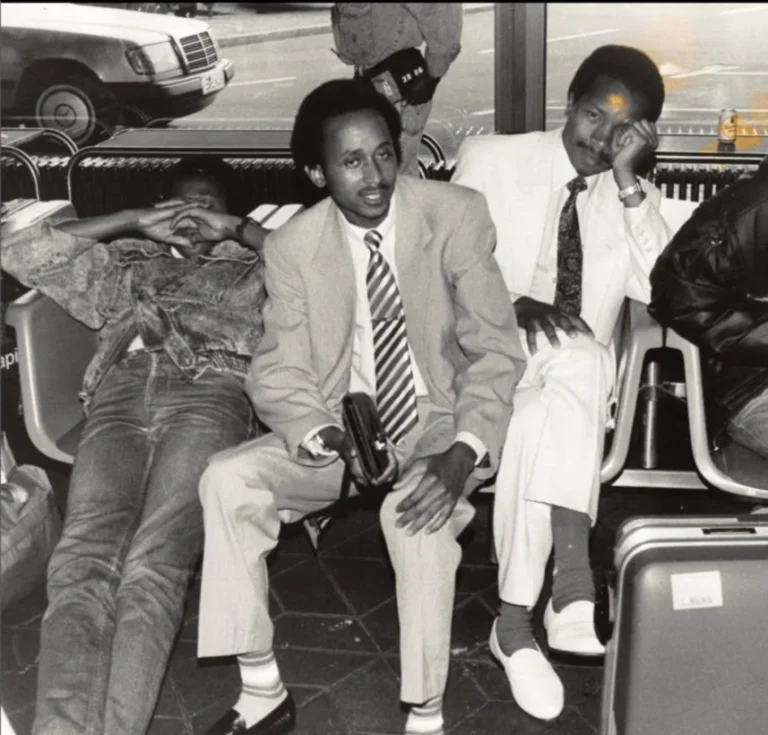
Mozambican workers at Eberswalde railway station, late 1980s. Photo: Christian Fenger
Christian Fenger and the guests from Mozambique
The state treaty between the GDR and Mozambique contained a momentous clause: the Mozambican workers were paid only a base amount of at least 350 marks in cash.
The state treaty between the GDR and Mozambique of February 24, 1979 ↗
Christian Fenger came from Frankfurt (Oder) and from 1981 worked as a skilled steel-forming worker at VEB Walzwerk Eberswalde-Finow, where he was employed as a quality inspector. He took photographs for the plant newspaper “Der Walzwerker” and was a member of the Eberswalde photo club. From 1987 on, he looked after a group of young workers from Mozambique and accompanied them with his camera for three years.
The roughly 90 men had come to Eberswalde under the 1979 state treaty, officially for vocational training. In reality, they mostly did heavy unskilled labor. The state withheld 25 to 60 percent of their wages. Under the treaty, this money was to be transferred to Mozambique and paid out to the workers in local currency after their return, as savings for their future. In reality, both governments offset the withheld wages against Mozambique’s debts to the GDR, for example for consumer goods, machinery and military aid. Without knowing it, the men were paying off their own country’s national debt. Those who returned to Maputo only very rarely received the money. The few who were paid anything at all got little out of it, because war and inflation had long since eaten up its value.
Christian Fenger, supervisor and photographer
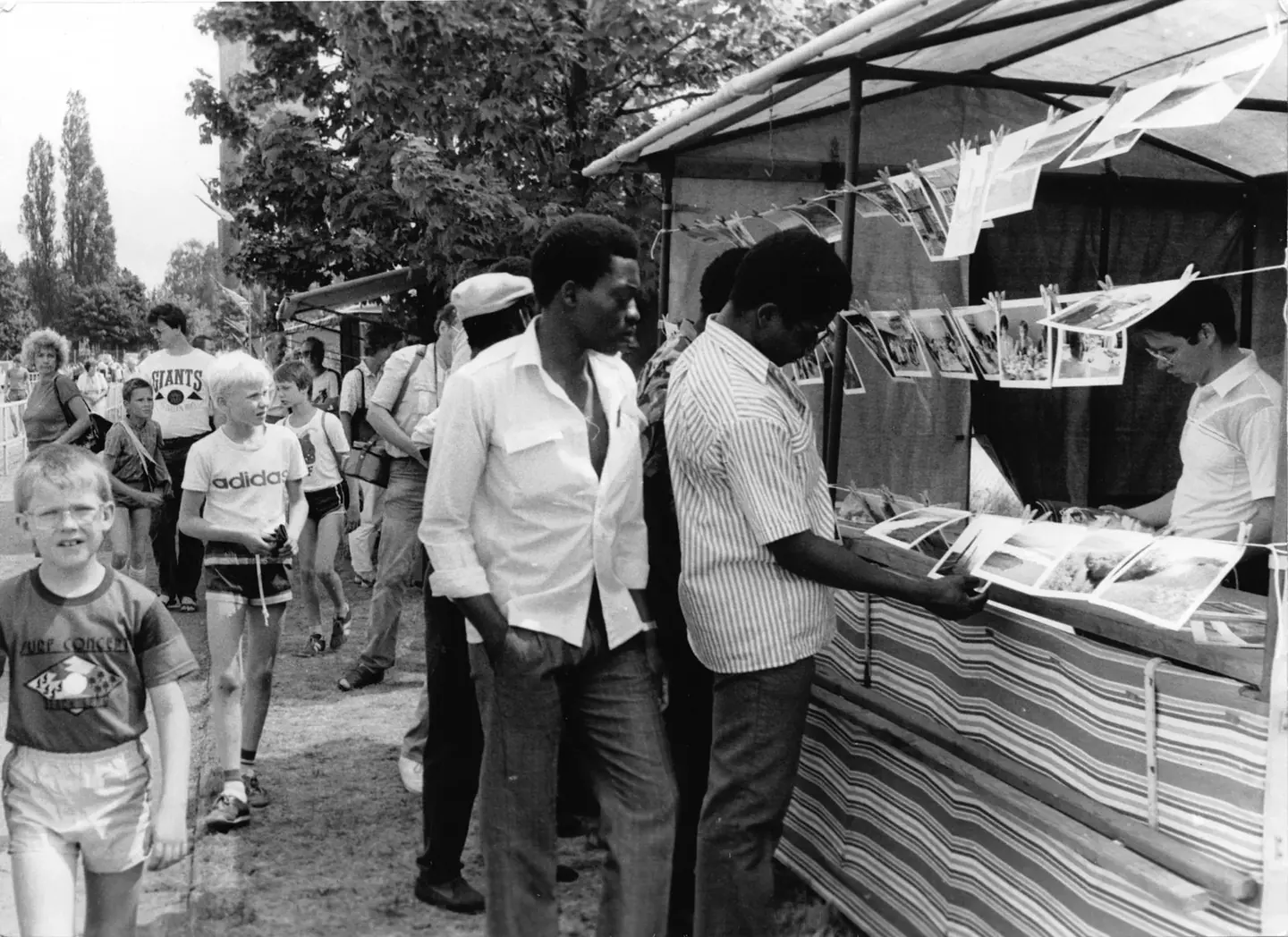
Looking after the men turned into close friendships.
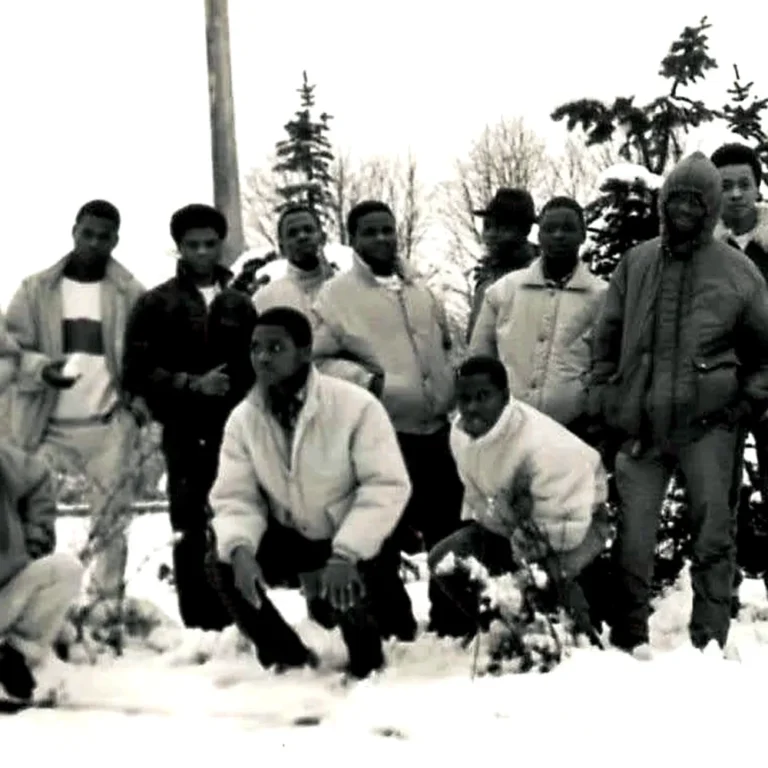
Fenger photographed the men he looked after not at work, but in their free time and in their everyday lives in Eberswalde. That is what makes his pictures special. The GDR’s photo agencies showed foreign workers at the machine, posed, as proof of successful solidarity. Fenger, by contrast, shows the everyday life of a small group of Mozambicans: the dormitory, parties, soccer, outings. In the dormitory on Leninstraße, the Kulturbund photo club ran a darkroom, where Fenger regularly developed his films and made his prints.
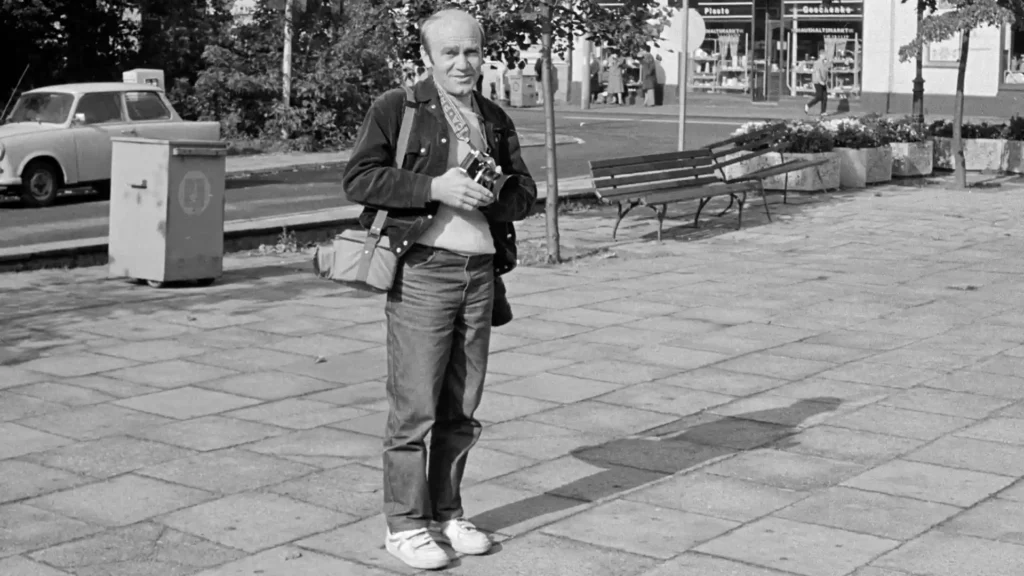
Christian Fenger, Eberswalde, September 30, 1989. Photo: Andreas Mroß
From the late 1980s on, Fenger had a dual role: he looked after the men from Mozambique and at the same time took photographs for the plant newspaper “Der Walzwerker.” What he thought of this is not recorded in any report. The pictures show how close they let him come.
Everyday life in Eberswalde
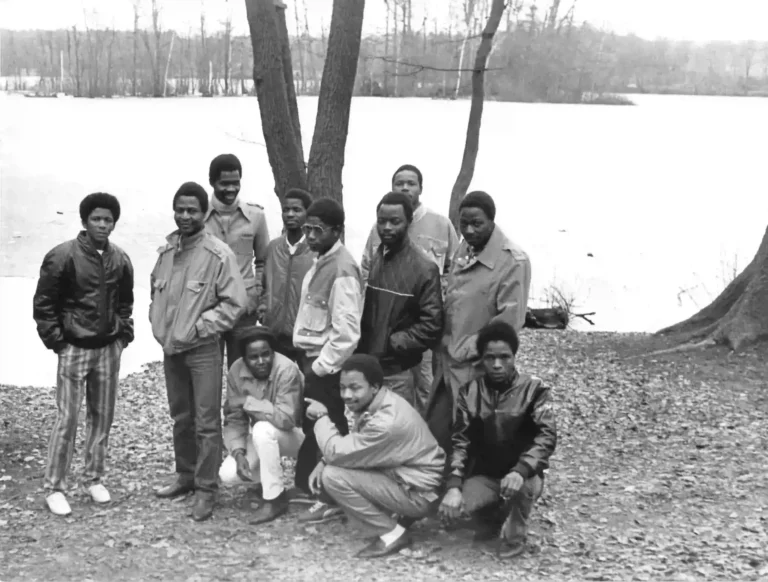
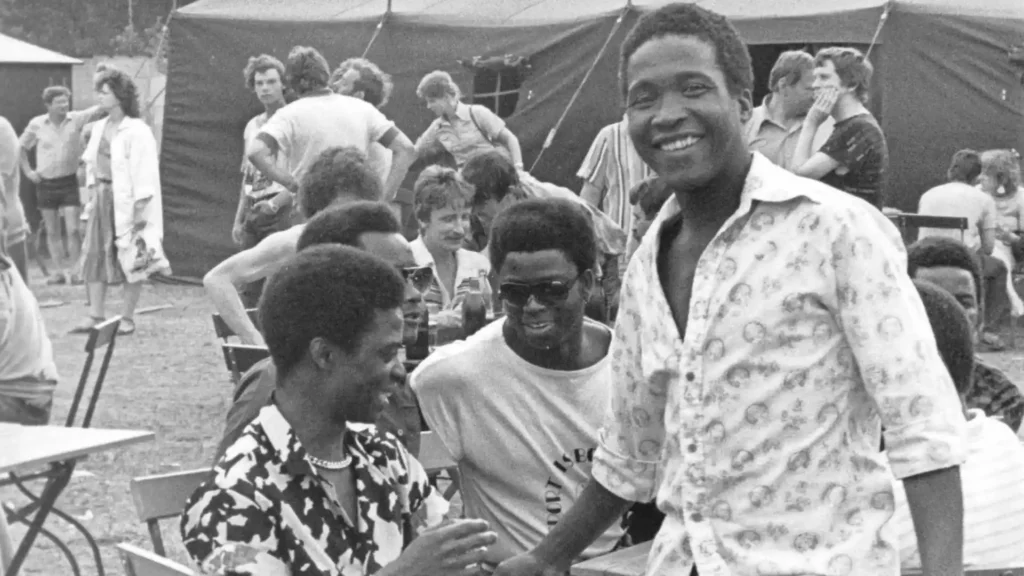
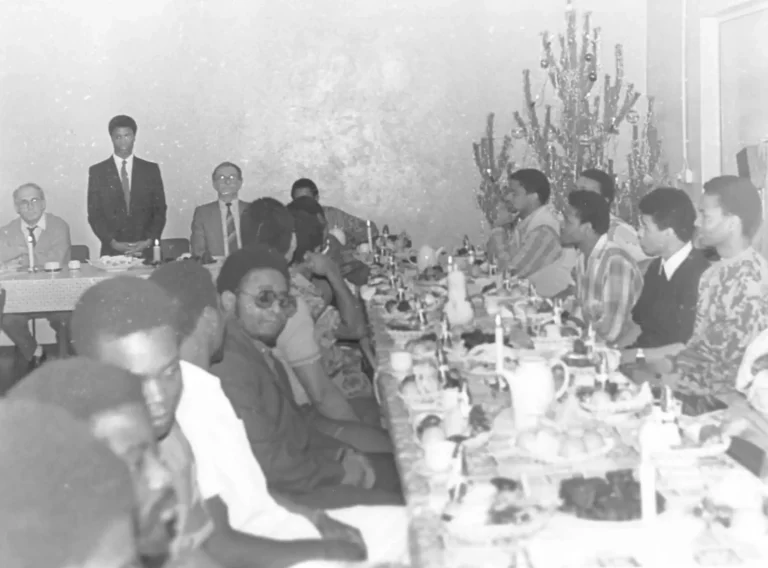
Most of the men were barely older than twenty when they came to Eberswalde from 1987 onwards. Their lives played out between the rolling mill, the dormitory on Leninstraße and the town: they cooked, celebrated and listened to music. At the same time, strict rules applied in the dormitory, and visits were restricted.
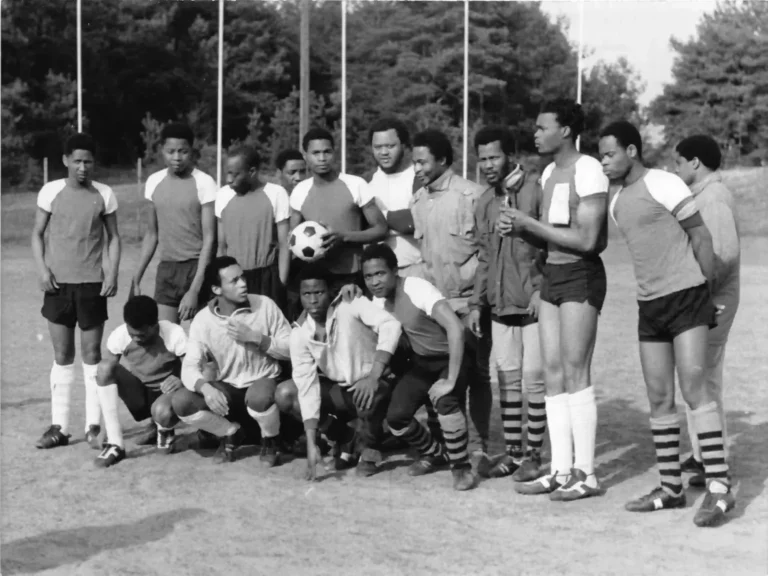
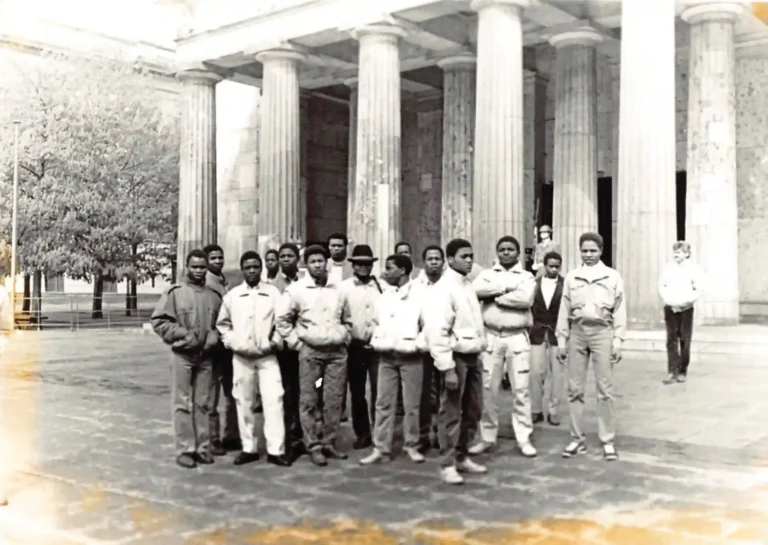
What became of the pictures
The digitization of Christian Fenger’s photographic estate dragged on until 2015. Each picture was given a control number. The collection comprises 537 photographs, many of them in several prints and formats. Numerous paper prints have badly yellowed, and in many cases inadequate fixing is gradually destroying the images. In 2022 the originals were entrusted to the DOMiD archive for safekeeping.
That same year, an exchange with Maputo began. Prints and publications are shared, pictures go back and forth. Anyone who recognizes themselves or others gives the people in the photographs their names back.
In this way, the pictures are slowly regaining their history. The archive places them back in the context in which they were taken, Eberswalde between 1987 and 1990, and brings them back to the people they show.
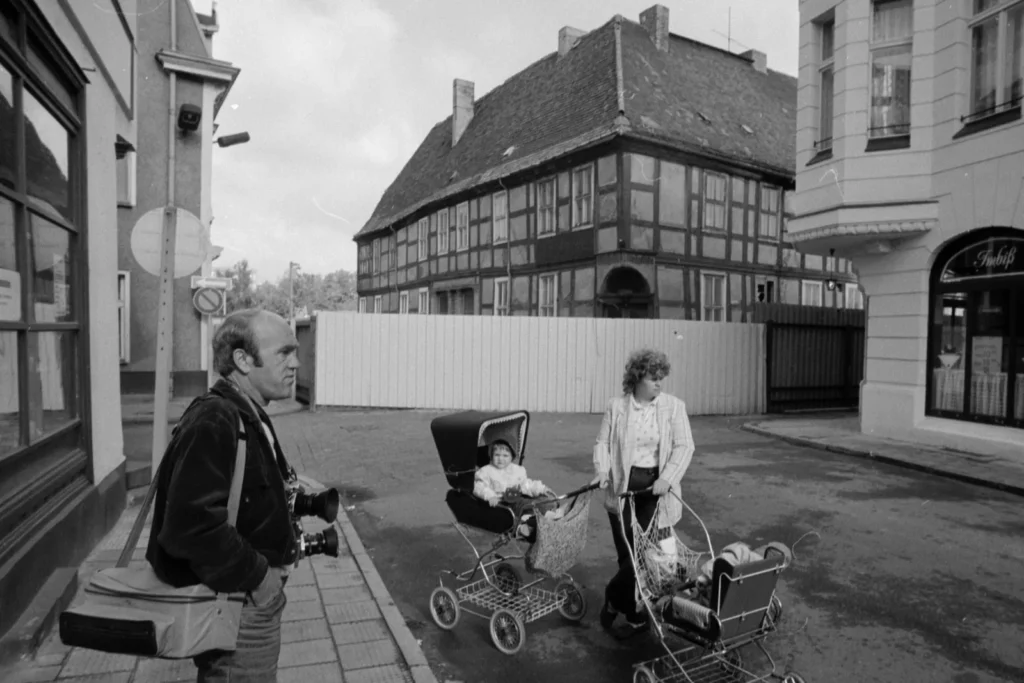
Christian Fenger in the town center of Eberswalde, September 1989. Photo: Andreas Mroß
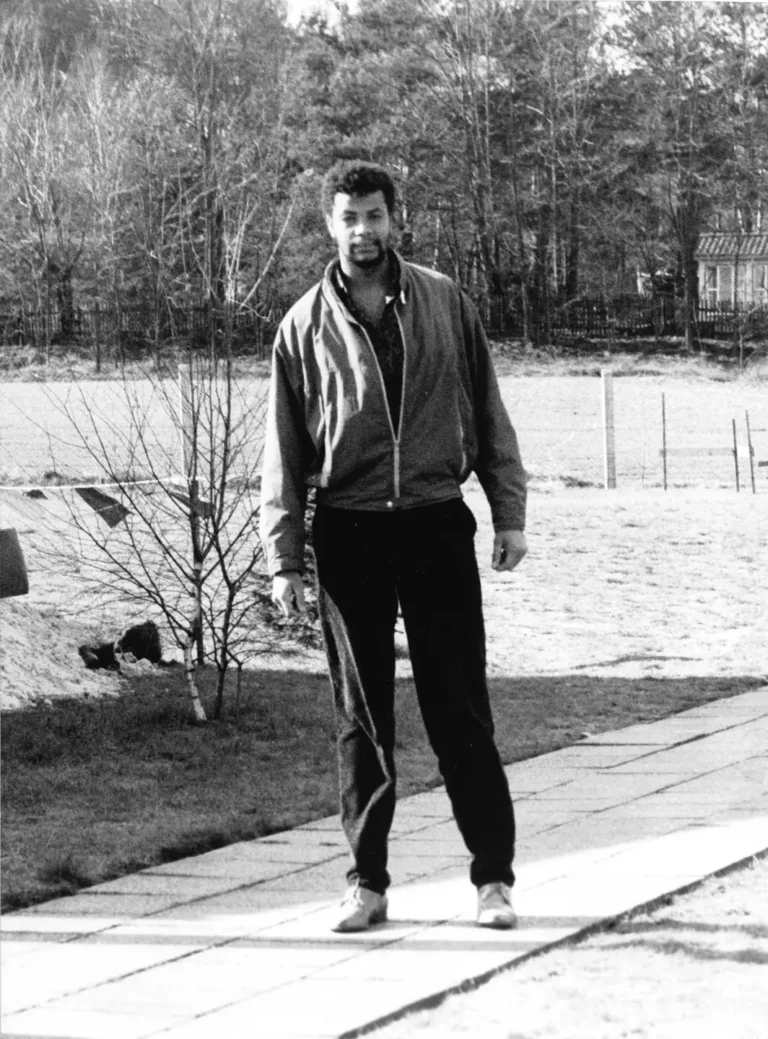
Arnaldo Soares Mendes
On February 23, 2026, Arnaldo Soares Mendes saw himself again in Christian Fenger’s photographs for the first time.
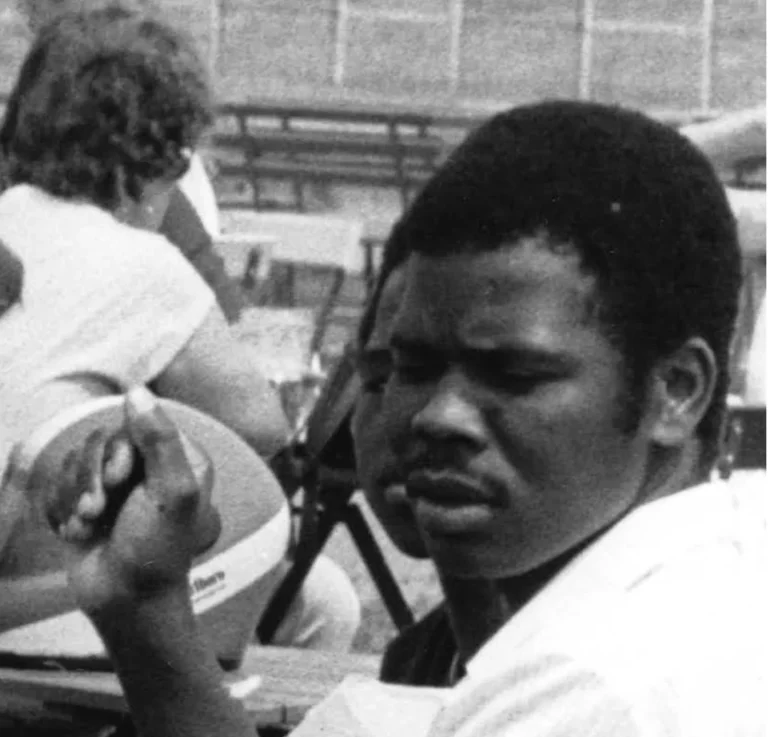
Bento Aucedro Tamele
On February 25, 2026, Bento Aucedro Tamele saw himself again in Christian Fenger’s photographs for the first time.
More eyewitnesses wanted
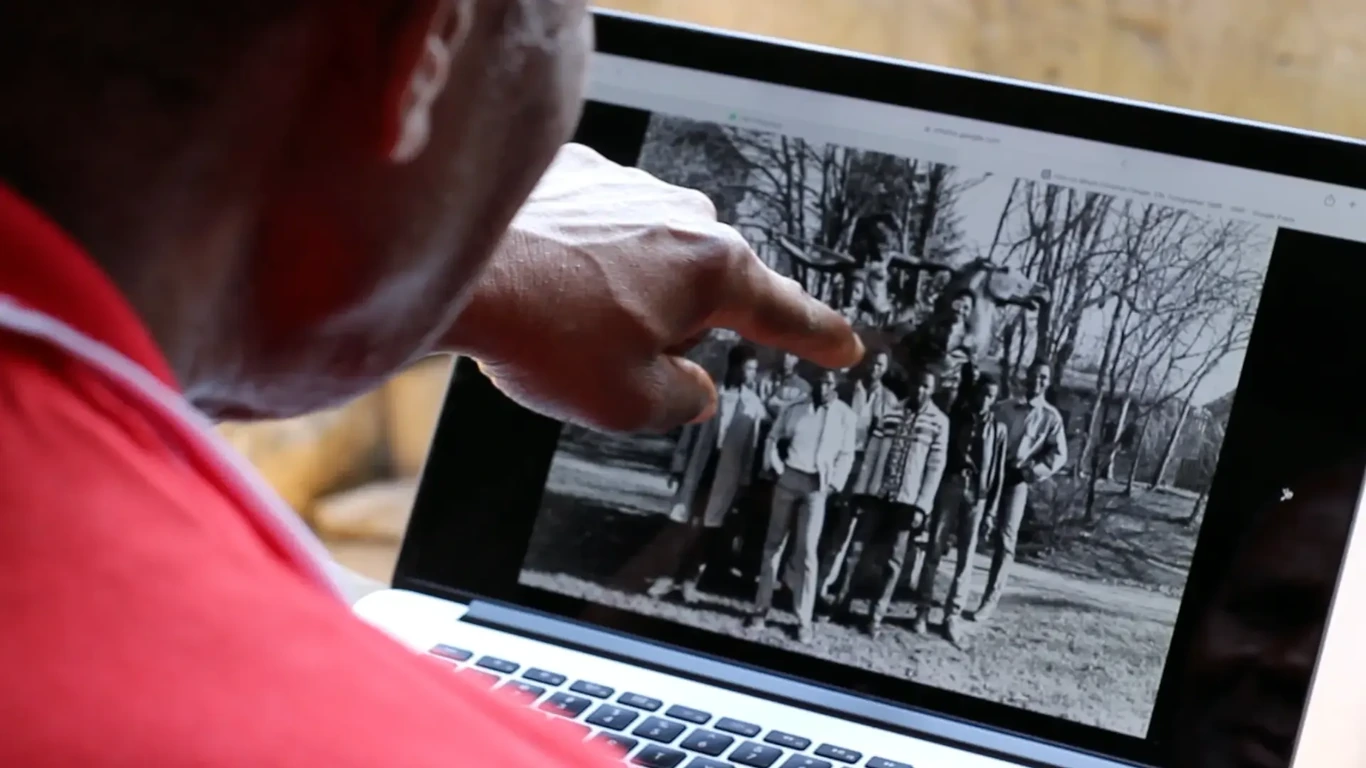
We do not know many of the names. The first clues came from Maputo. From 2010 onwards, Jason Byrne and Helge Elisabeth Zeitler shot the film “Base Camp Germany” there, released in 2014. In it, Arnaldo Soares Mendes says: “The GDR had no robots, the GDR had us.” The same man appears in Christian Fenger’s photographs from Eberswalde.
In February 2022 the first pictures appeared on Instagram, and relatives of the former Mozambican workers from the Eberswalde-Finow rolling mill got in touch. Today, former colleagues in Maputo are providing clues to more and more photographs.
Christian Fenger’s photographs are looking for their witnesses. Clues about people, places and occasions help us move forward.
Research in Mozambique and Germany
Since February 2026, former workers of the Eberswalde-Finow rolling mill have been talking in a WhatsApp group about their time in Eberswalde and about what came afterward. Three sentences sum up what this project is about.
Three ways into this story
ChristianFenger.de is a growing documentary archive. Its starting point is 537 black-and-white photographs that Christian Fenger took between 1987 and 1990. At its center are the lives and working worlds of a group of Mozambican workers in Eberswalde and the connection between Eberswalde and Maputo. Historical photographs, documents, present-day interviews and new findings are brought together. The archive grows with every person identified, every new piece of information and every newly uncovered connection.
From 1987 to today
87 | 27
40 years later, there is still no solution. No moral recognition, no financial compensation for the stolen years.
To the hub ↗
Hub 87 | 27 · Photo albums, timeline, videos
Invited and forgotten
By the end of 1989, 22,161 Mozambicans had entered the GDR at its invitation, for many the beginning of an adventure whose outcome is still open today. As a number, their story remains abstract. Fenger’s photographs of the roughly 90 men from the Eberswalde rolling mill make it possible to tell it in detail. The research reconstructs their life paths, representing all those who came at the time. Individual biographies make it possible to understand the injustice done to the African workers.