Maputo
Return in 1990, dispersal and the traces up to today.

The pictures get their story back
In Maputo, the pictures return to the people who appear in them. Former colleagues recognize themselves and others, give the faces names and tell what came after 1990. In this way, Eberswalde is mirrored in Maputo.
A hasty journey home
In 1990 the Mozambicans’ employment contracts were terminated, and so were their places in the dormitory. They were urged to fly back to Mozambique with a departure bonus of 3,000 marks. Both German governments wanted the foreign workers to leave the GDR before October 3, 1990, the day of reunification.
Between May and October 1990, about 12,000 Mozambicans returned. From the Eberswalde-Finow rolling mill, the first men flew back as early as the beginning of September 1990. Christian Fenger photographed the departure at Schönefeld and Tegel airports.
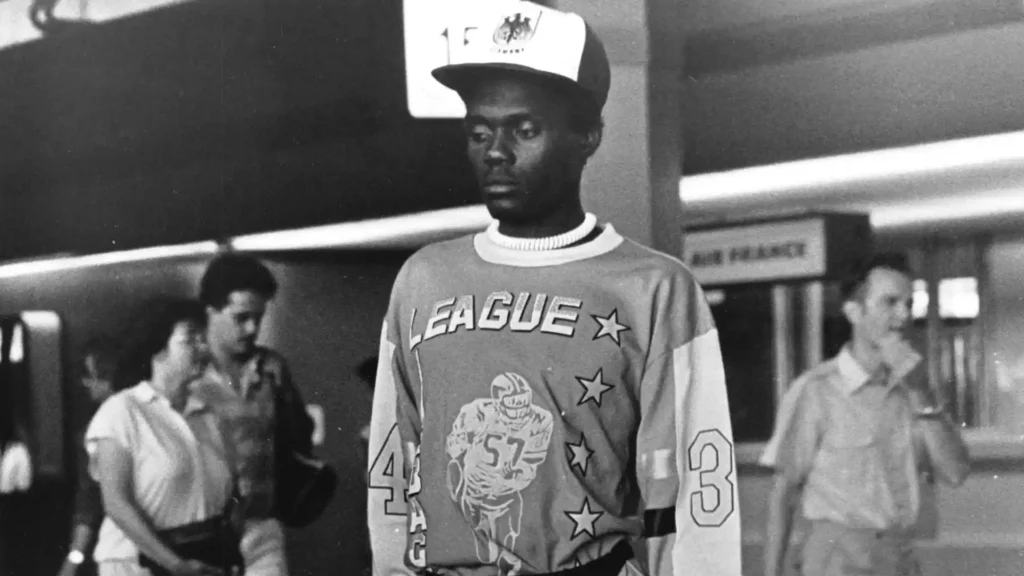
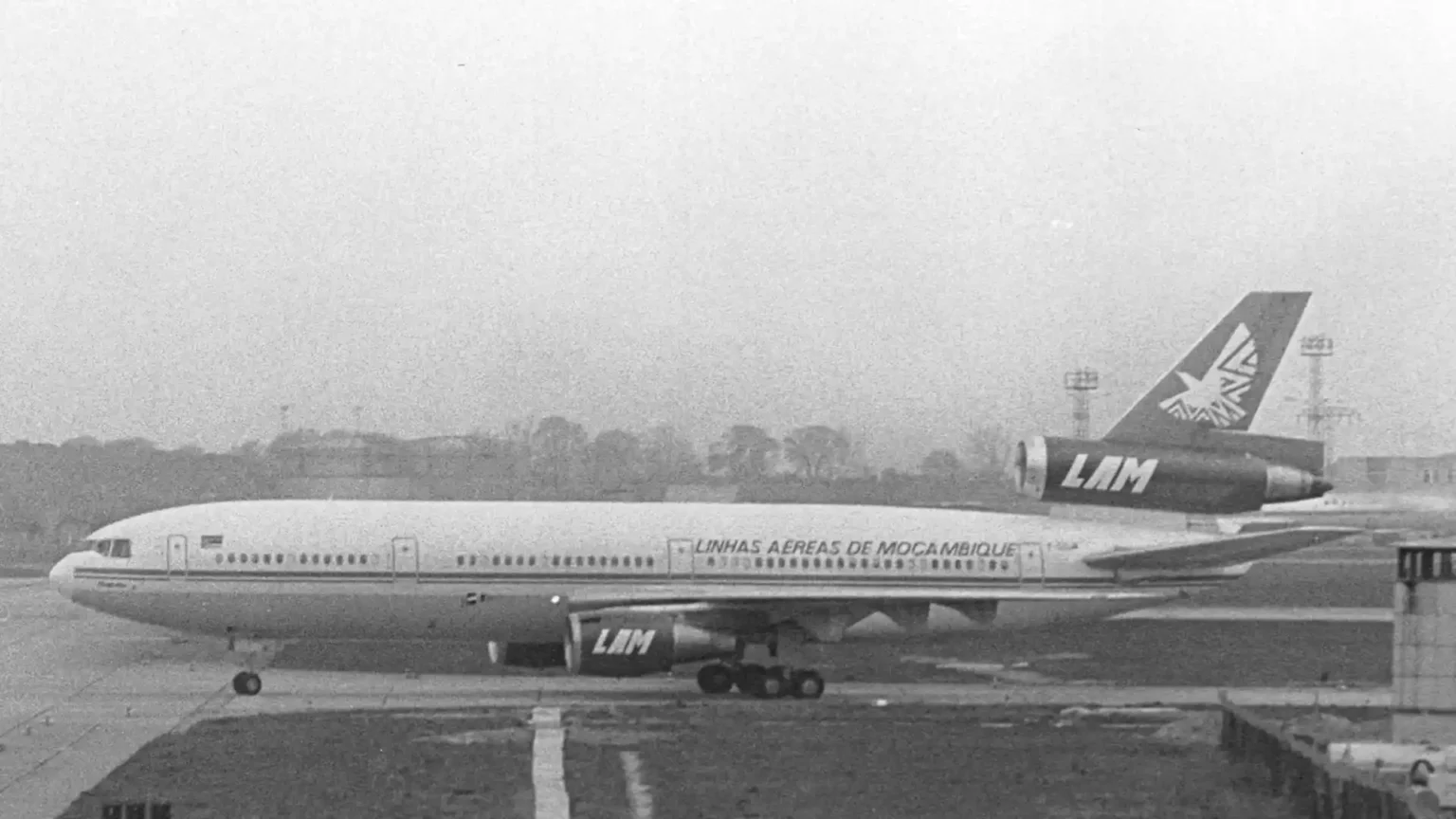
Tracing the past
Former colleagues in Maputo have recognized people in Fenger’s pictures. Lavo Ernesto G. has since died in Mozambique. Damas Orlando was the group leader of the Mozambican workers at the rolling mill. Every name opens up a life story between two countries.


The Madgermanes from Eberswalde
Do you recognize anyone?
Share a tip ↗
Archive
In Mozambique they are called regressados or Madgermanes. A table from the GDR Ministry of Labor and Wages dated March 1990 records exactly 22,161 Mozambican workers who had entered the country by December 31, 1989, 6,464 of them in 1988 alone. At the end of 1989, 15,143 of them were still living in the GDR. Uta Sextro gives the same annual figures in 1996.
For the GDR, the arrangement paid off: according to a 1987 paper for the Secretariat of the SED Central Committee, each Mozambican worker contributed a net 18,483 marks to national income, so 13,000 workers from 1988 on contributed some 240 million marks a year (Federal Archives, DE 1/57849).
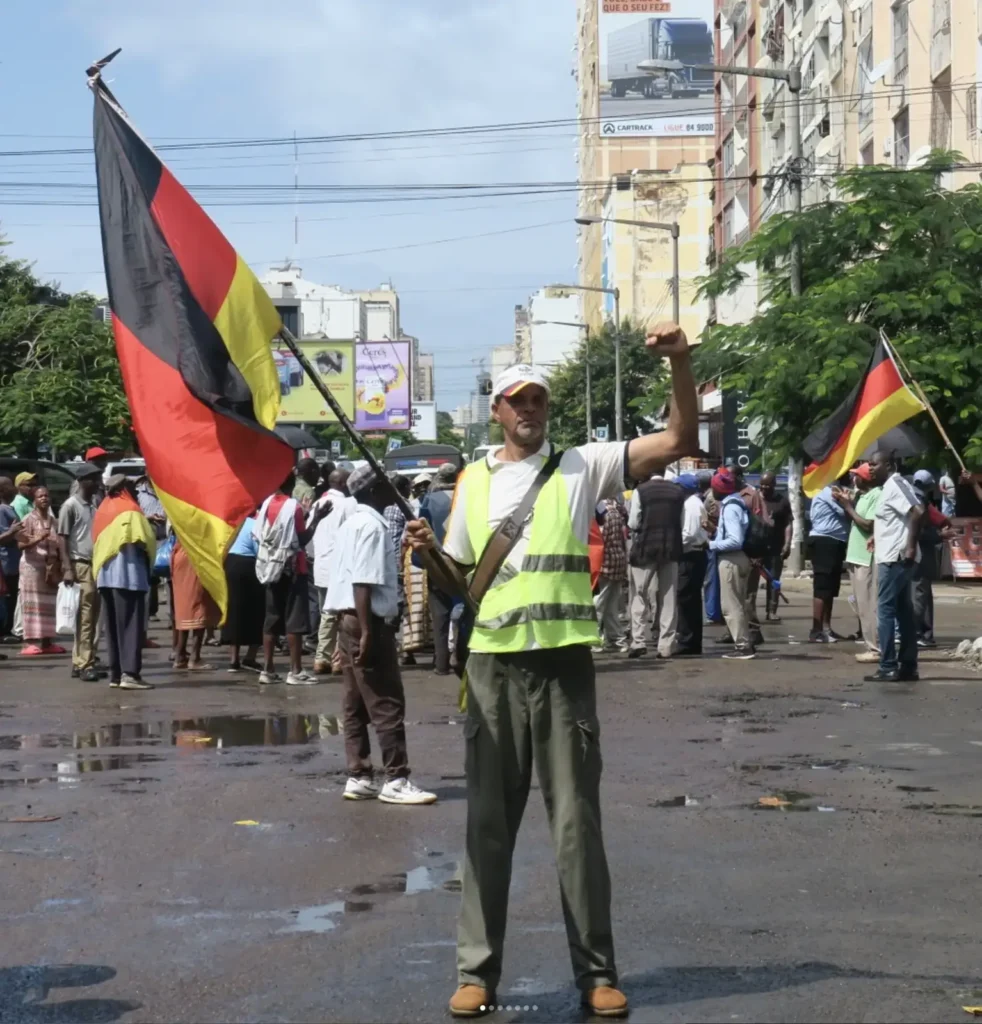
The withheld portions of wages are still disputed today. Every Wednesday, the regressados demonstrate in Maputo.
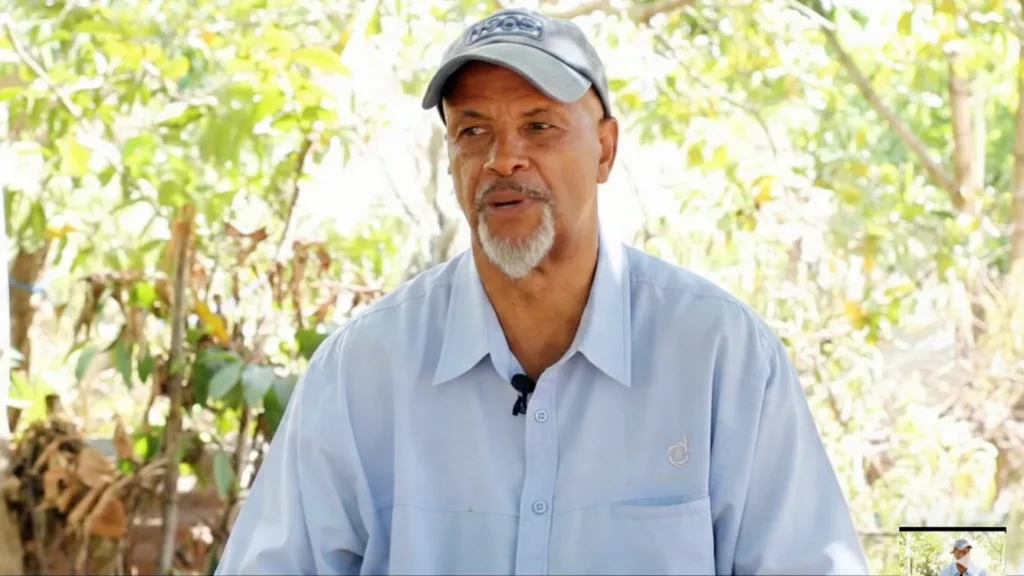
Arnaldo Soares Mendes in an interview, Maputo 2026. Image source: screenshot
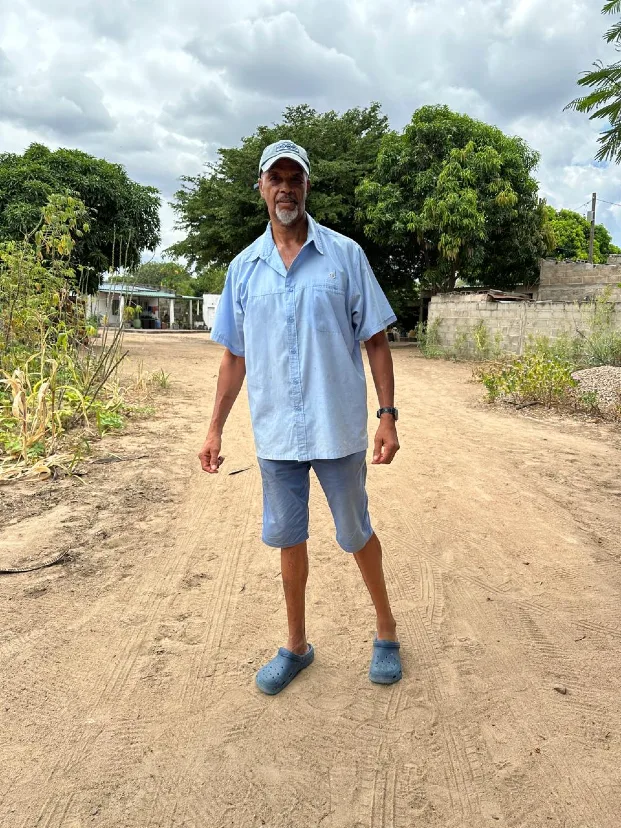
Arnaldo Soares Mendes, Maputo 2026. Image source: screenshot
Maputo, 2026
Arnaldo Soares Mendes
In 1987 Arnaldo Soares Mendes came from Mozambique to Eberswalde, to VEB Walzwerk Eberswalde-Finow, with high hopes. Three years later he returned to Maputo. As agreed, sixty percent of his wages had been transferred to the Mozambican Ministry of Labor. The withheld portions of his wages have still not been paid out.

Bento Aucedro Tamele in his tailor shop, Maputo 2026. Image source: screenshot
Maputo, 2026
Bento Aucedro Tamele
Bento Aucedro Tamele also came to Eberswalde in 1987, together with Arnaldo Soares Mendes, as one of some 90 Mozambican workers who came to the rolling mill by October 1988. Today he runs a small alterations shop in Maputo. On February 25, 2026, he saw himself and many of his former colleagues again for the first time in Christian Fenger’s photographs.
The photos in Maputo
Where the pictures were taken.
Back to Eberswalde ↗
Eberswalde · Rolling mill, dormitory, town
Since 2022 there has been an exchange with Maputo, and Christian Fenger’s photographic estate is being made accessible there again. Former colleagues recognize themselves, their friends and the dormitory at Leninstraße 108. Every encounter is documented and feeds into the search for the people in the pictures. We publish names only after consulting those concerned.


The eyewitnesses
During research and filming in Mozambique, detailed video interviews were recorded with former workers of VEB Walzwerk Eberswalde-Finow. This is where their place is being created: five eyewitnesses, each with video and transcript.
Work in progress. Videos and transcripts will be added step by step.
Francisco Armando Mondlane
Video interview, Maputo, April 26, 2026
Video and transcript coming soon.
Transcript coming soon ↗
Fanuel Massango
Video interview, Maputo, September 30, 2026
Photos, video and transcript coming soon.
Transcript coming soon ↗
Arnaldo Soares Mendes
Video interview, Maputo, February 23, 2026
Video and transcript coming soon.
Transcript coming soon ↗
Bento Aucedro Tamele
Video interview, Maputo, February 25, 2026
Video and transcript coming soon.
Transcript coming soon ↗
Julião Chavanguana
Video interview, Maputo, August 15, 2026
Video and transcript coming soon.
Transcript coming soon ↗
Maputo | Eberswalde | Maputo
Since February 2026, former workers of the Eberswalde-Finow rolling mill, Stélio Guibunda in Maputo and Thomas Balzer, researcher, documentary maker and filmmaker from Berlin, have been in touch in a WhatsApp group. Here, photos are recognized, names are found, memories are shared and demands are formulated. The quotes have been translated from Portuguese.
“We are in the fight and demand the money the two governments owe us.”
Arnaldo Soares Mendes, February 10, 2026
“That is why a political solution with compensation and redress is needed to correct this historical mistake.”
Arnaldo Soares Mendes, February 11, 2026
“For recognition, respect, justice, human rights and compensation: the fight goes on to the last man.”
David Macou, February 11, 2026
“Some photos were taken at the first elections in which we took part as foreigners.”
Agostinho S., September 25, 2026
“This last photo shows a party we were at. I don’t remember the year.”
Arnaldo Soares Mendes, September 30, 2026
“We will survive.”
Arnaldo Soares Mendes, September 23, 2026
Every Wednesday in Maputo
In Mozambique they are called Madgermanes. Since December 1990 they have been demanding their withheld wages. At the first protest march outside the Ministry of Labor on December 5, 1990, two people died. To this day they gather in Maputo every Wednesday.
Arnaldo Soares Mendes came to Eberswalde in 1987 and returned three years later. Sixty percent of his wages were transferred to the Mozambican Ministry of Labor. The money has still not been paid out.
22,161
Mozambican workers entered the GDR by the end of 1989 (MfAL, March 1990)
25 to 60 %
of wages were withheld
35 years
of protest for recognition and payment, since December 1990
“A historical mistake was made here. Both states must take responsibility for this mistake.”
Arnaldo Soares Mendes, Maputo, 2026
“Nobody is begging Germany for charity. We want the law to be upheld.”
David Macou, Maputo, 2026
The state treaty between the GDR and Mozambique
On February 24, 1979, Erich Honecker and Samora Machel signed the “Agreement on the temporary employment of Mozambican workers in socialist enterprises of the GDR” in Maputo. On this basis, 22,161 Mozambican workers, women and men, had entered the GDR by the end of 1989. They did not come of their own accord. The GDR had requested them because its enterprises were short of workers. Mozambique, economically devastated after the end of Portuguese colonial rule and in the midst of civil war, provided them. The selection was made by the Ministry of Labor in Maputo. It was looking for young women and men between 18 and 25, in good health and with at least four years of schooling.
Training as a promise
Officially, the agreement served the purpose of qualification. The young Mozambicans were to work in the GDR, receive vocational training at the same time and, after their return, use this knowledge to help build socialist Mozambique. In practice, things usually looked different. The enterprises mostly employed them as unskilled laborers, for heavy physical work in rolling mills, mining, slaughterhouses, vehicle manufacturing or the textile industry. Only a few received recognized vocational training.
Equal pay, but not in their hands
On paper, the Mozambican workers were on an equal footing with their German colleagues. For the same work, they were to receive the same pay. In reality, they were paid only a base amount of at least 350 marks in cash in the GDR. The state withheld between 25 and 60 percent of their net wages. This money was to be transferred to Mozambique and paid out to the workers in local currency after their return, as savings for their future.
In most cases, that never happened. The withheld portions of their wages were offset between the governments against Mozambique’s debts to the GDR, for example for machinery, consumer goods and military aid. Without knowing it, the workers were thus financing their own country’s national debt. Those who returned found no savings waiting for them.
Control instead of friendship between peoples
The agreement spoke of solidarity and friendship between socialist states. Everyday life was marked by segregation. The Mozambican workers lived in company-owned dormitories with strict house rules and visiting regulations. They were not allowed to bring their families. Their stay was temporary and tied to their job. Women who became pregnant faced a choice between terminating the pregnancy and returning to Mozambique. Contact with the local population was possible but not encouraged, and often monitored.
The end in 1990
With the collapse of the GDR, most Mozambican workers lost their jobs. The enterprises dismissed them, and the return journey was organized. Many returned to a country at civil war, without training and without savings. Whether their years of employment in the GDR would later count toward a pension remained unclear for a long time and depended on the individual case. Some reached individual solutions after years; many came away empty-handed. Some stayed in Germany and experienced open racism and right-wing violence in the years after reunification.
In Maputo, the returnees call themselves Madgermanes. Since 1990, they have gathered every Wednesday to demonstrate and demand their withheld wages. To this day, they have received no compensation, neither from Mozambique nor from Germany.
Base Camp Germany
A park in downtown Maputo is called “Base Camp Germany.” This is where the Madgermanes, the former workers from the GDR, meet. There, from 2010 onwards, Jason Byrne and Helge Elisabeth Zeitler interviewed returnees for his short film, released in 2014, among them Arnaldo Soares Mendes. He says: “I was in Eberswalde-Finow, near Berlin, in a steel mill.”
The film shows what Fenger’s pictures cannot tell: how the men returned after 1990 without money to a country at civil war and have been waiting ever since for their share of their wages to be paid out. It is also the first act of recognition: a worker from the Eberswalde rolling mill gets in touch from Maputo.
For this project, the 2014 film was the initial spark, even before the launch of the Instagram channel in February 2022, through which José Mafueca was recognized in one of the pictures. Since then it has been clear: Fenger’s photographs should not stay in the archive, nor hang without names on a museum wall. They belong back with the people who appear in them.
The photographs in Eberswalde ↗
Films, reports, interviews
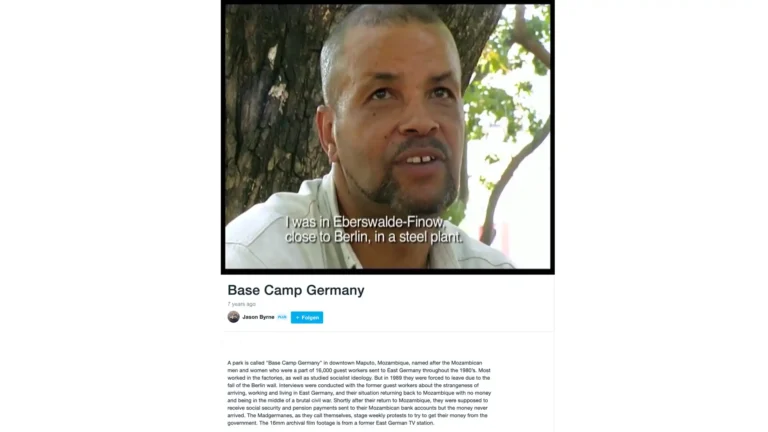
Jason Byrne: Base Camp Germany
A film by Jason Byrne relating to the history of the Mozambican workers in the GDR.
Film excerpt coming soon
Deutsche Welle
Report by Stélio Guibunda
The journalist and documentary filmmaker from Maputo reports on the Madgermanes and is a co-author of this project.
Report coming soon
Interviews 2026
New conversations in Maputo
Stélio Guibunda conducts interviews with former rolling mill workers, among them Francisco Armando Mondlane about the night of November 24, 1990, in Eberswalde.
Excerpts coming soon
A group of former colleagues
Since February 2026, former workers from the Eberswalde-Finow rolling mill have been in touch with the project in a shared group. They recognize faces, remember places and events and share their own photos. Anyone who worked in Eberswalde can join this group.