Hub 87 | 27
The hub of the project: photographs, documents, interviews and tips from Eberswalde, Berlin and Maputo in one place.
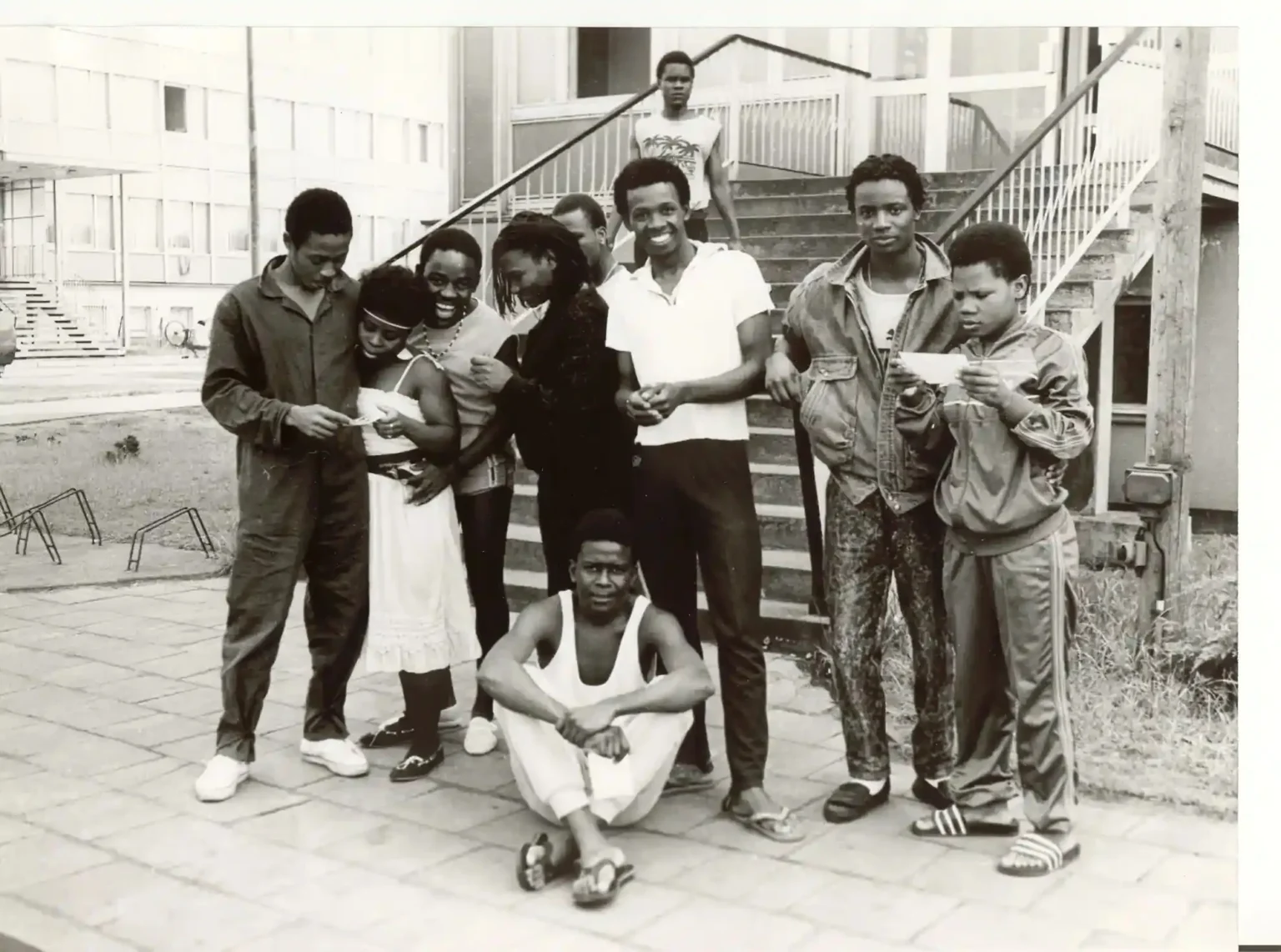
The pictures get their story back
87 | 27 connects the years in which the pictures were taken with the present in which they return: to Eberswalde, where they were taken, and to Maputo, to the people who appear in them.
How the hub works
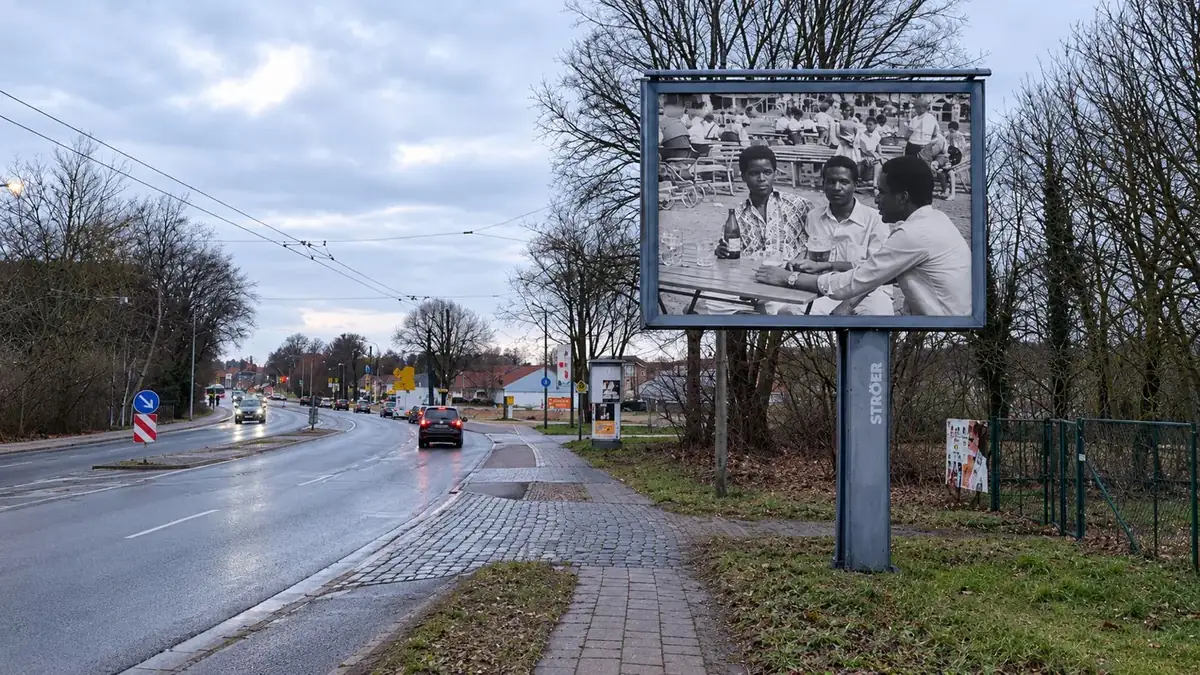
Back in Eberswalde, large and public.
Eberswalde ↗
Where the pictures were taken
HUB has two levels. In today’s usage, a hub is a junction. This is where the threads of the project come together: Fenger’s photo albums, files, interviews from Maputo and every new tip.
At the same time, HUB refers to the language of the GDR administration, where the housing of foreign workers was recorded as Heimunterkunft or Heimunterbringung, accommodation in a hostel. For the men from Mozambique, this was the workers’ dormitory of VEB Walzwerk Eberswalde-Finow at Leninstraße 108 in Eberswalde: assigned by the company, monitored, with rules for visits and leisure time. In the dormitory, the Kulturbund photo club ran a darkroom, where Christian Fenger developed his films and made his prints. Many of his pictures were also taken there.
87
1987: The first workers from Mozambique arrive at the rolling mill, and in January Christian Fenger begins to photograph them.
27
2027: 40 years later. By then, the group’s story should be reconstructed as fully as possible.
|
The line separates and connects: then and now, Eberswalde and Maputo.
Christian Fenger workspace
The Christian Fenger workspace is the project’s internal work area. It holds research, documentation and material in preparation: digitized photographs, documents, transcripts, interview recordings and notes, including personal data and information that has not yet been verified.
That is why access is password-protected. The password is available on request. Whatever has been checked and approved in the workspace appears here on the website.
To the workspace ↗
Request the password ↗
The struggle for recognition and compensation
On September 30, 2024, Evelyn Zupke, the Federal Commissioner for the Victims of the SED Dictatorship at the German Bundestag, and the German Institute for Human Rights presented a demand at the Federal Press Conference in Berlin that former workers from Mozambique have been waiting for since 1990: compensation for their years in the GDR.
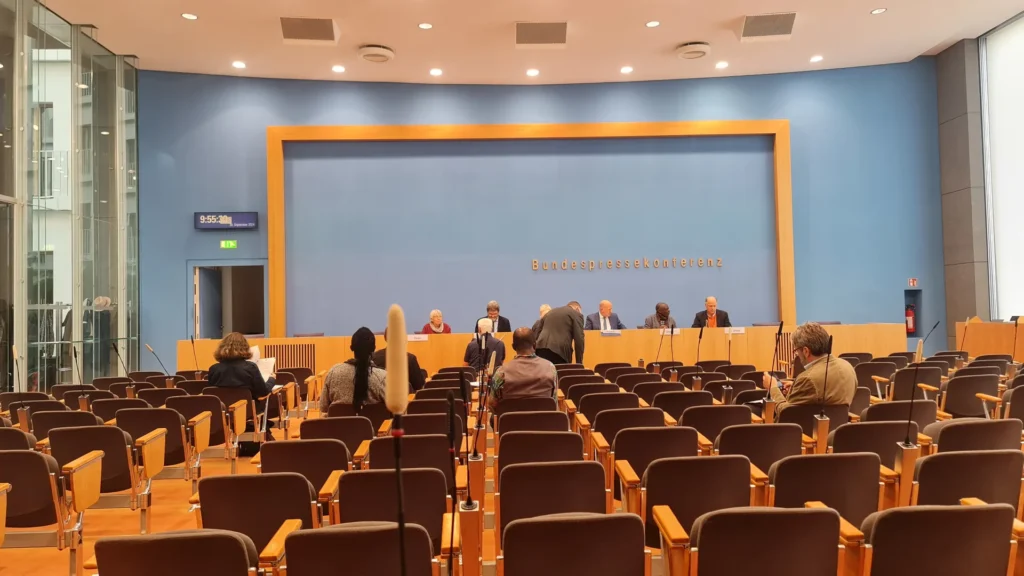
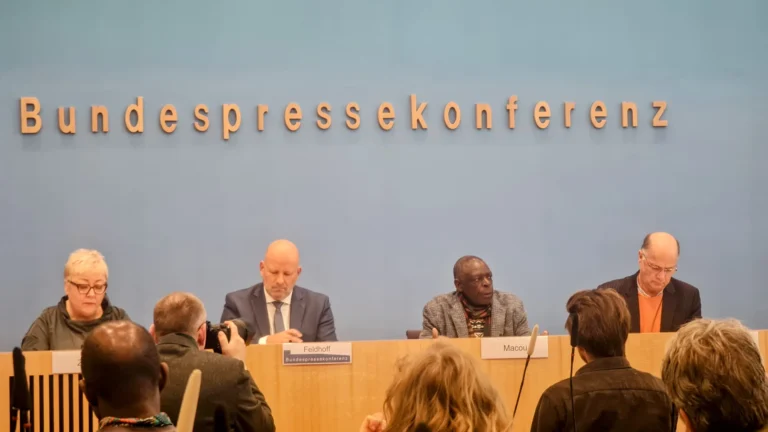
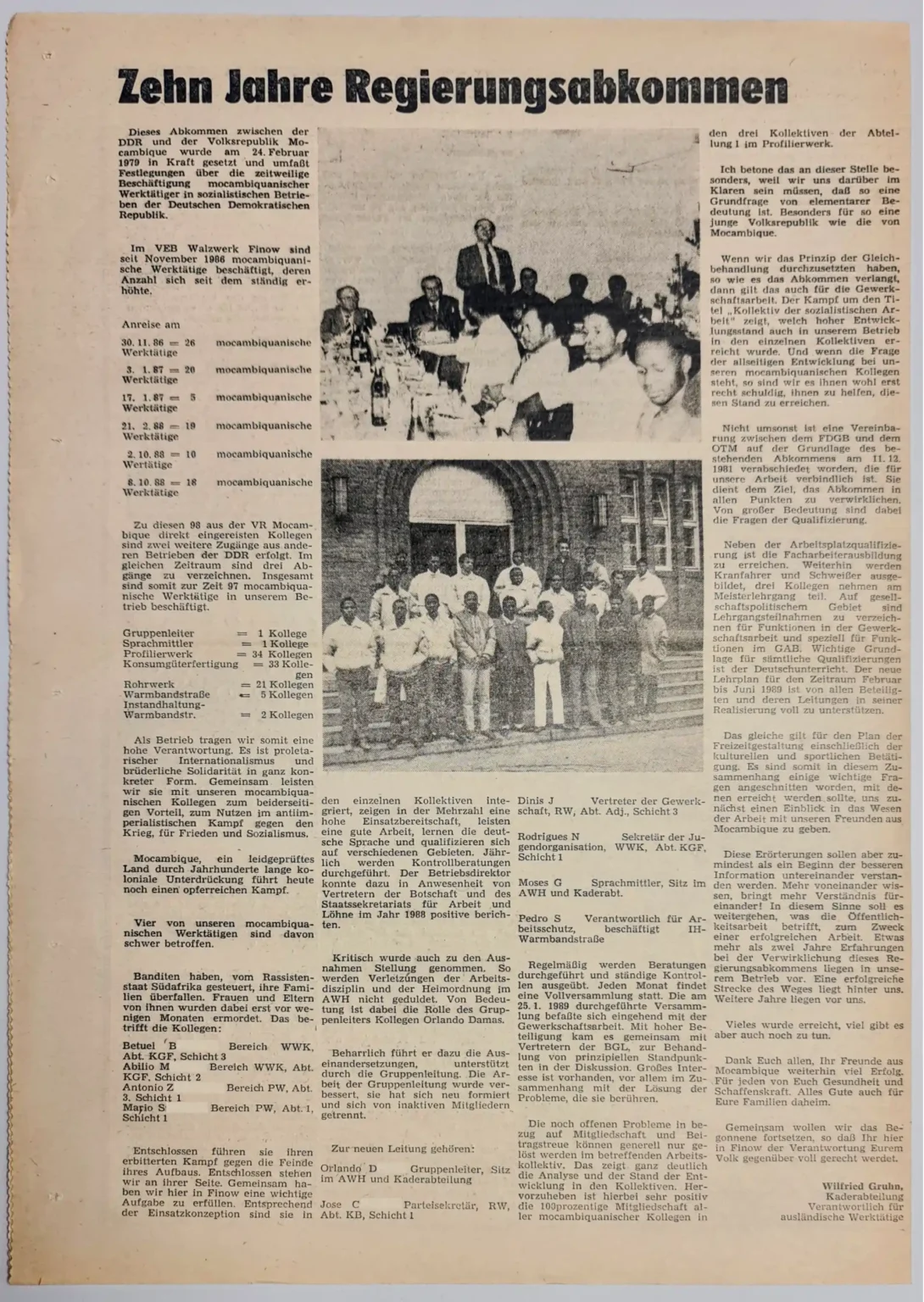
Between 1979 and the end of 1989, 22,161 women and men from Mozambique entered the GDR to work in its companies, including at VEB Walzwerk Eberswalde-Finow. The 1979 government agreement provided for part of their wages to be withheld and paid out in Mozambique after their return. Between 25 and 60 percent was withheld. The money went into the GDR state budget and was offset against Mozambique’s debts. Most of them never received it. Their contributions to the GDR social insurance system also never turned into pensions.
Milestones since 1990
July 30, 1990
Dismissal
83 Mozambicans at the Eberswalde-Finow rolling mill are dismissed with notice, even before the Unification Treaty.
Sept. 1990
Departure
The first men of the Eberswalde group return to Mozambique.
Dec. 1990
Protest
First protest march by the Madgermanes outside the Ministry of Labor in Maputo.
1995
Magdeburg
First Magdeburg conference on the outstanding wage claims.
Sept. 2003
Maputo
During a demonstration in Maputo, Virgílio A. is shot dead by the police.
2004
Embassy
41 former workers occupy the German embassy in Maputo.
2019
Magdeburg Memorandum
Second Magdeburg conference, “Respect and Recognition.”
9/30/2024
Federal Press Conference
The Madgermanes renew their demands in Berlin.
The basis was an appeal dated August 5, 2024. It calls for unbureaucratic, flat-rate compensation, graded by the length of the contract and of the stay, combined if possible with a solution for the outstanding pension claims. The figure under discussion was 4,000 to 6,000 euros per person, some 50 million euros in total. The appeal is supported by Almuth Berger and Markus Meckel, the last foreign minister of the GDR, among others.
In 2024 the German federal government pointed out that all obligations under the agreement had been fulfilled. Claims, it said, should be addressed to Mozambique. After reunification, Germany had paid Mozambique 75 million deutschmarks in development aid, but hardly any of it reached those affected. The 2024 demand has produced no result to this day; there is no compensation.
Those affected also include the men Christian Fenger photographed in Eberswalde from 1987 on. Arnaldo Soares Mendes is still waiting for his share of his wages to be paid out. More about the Madgermanes in Maputo
Sources: German Bundestag, announcement by the SED Victims’ Commissioner on the Federal Press Conference of September 30, 2024; Appell für eine kurzfristig zu erreichende Regelung, August 5, 2024; evangelisch.de, September 30, 2024; taz, Warten auf Lohn seit 34 Jahren.
Photo albums
A selection from the photographic archive, embedded directly from the image library. The complete overview of all albums can be found in the archive.

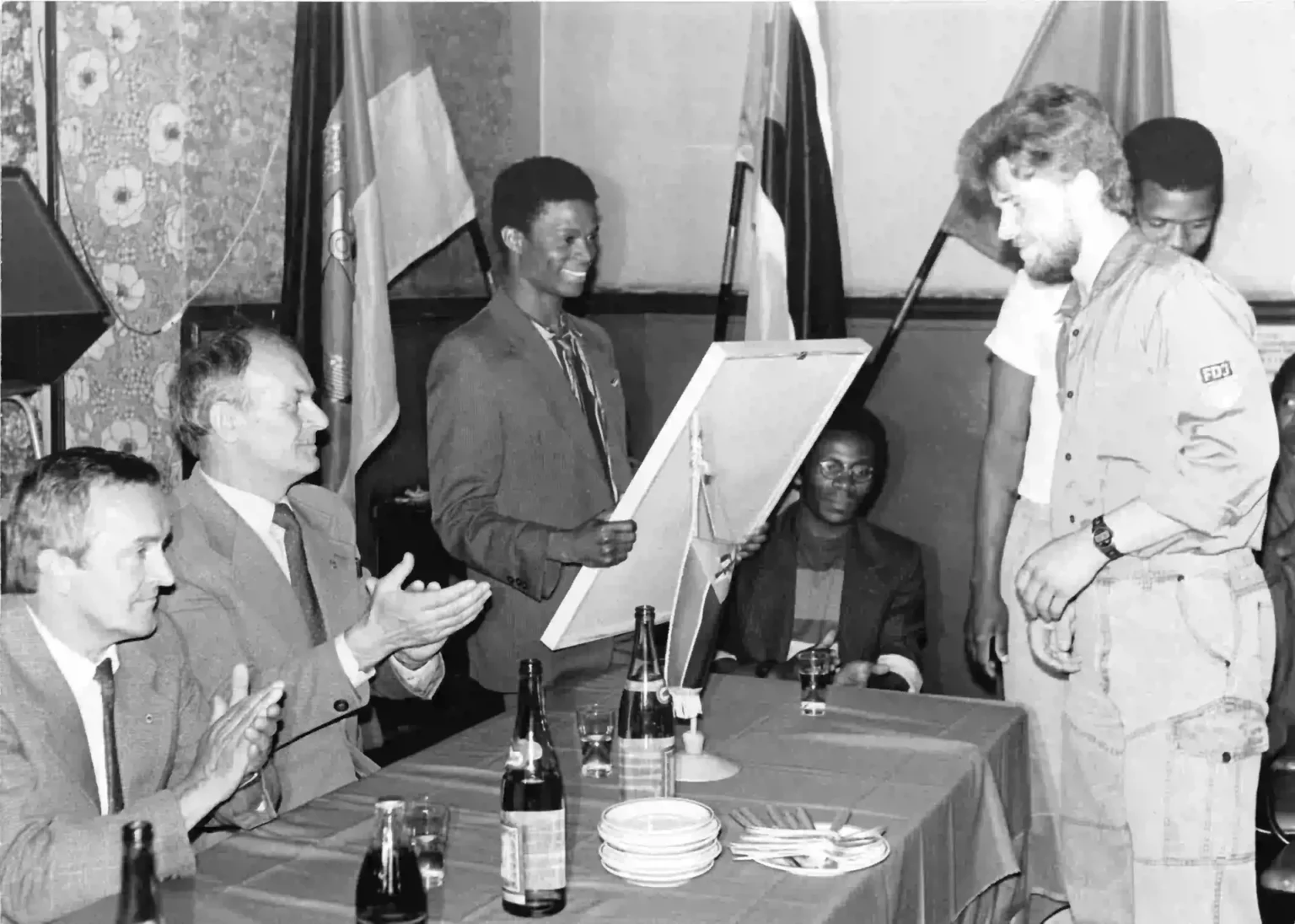
1987 to 2027 · Diaspora Mozambique, GDR, Germany
The title “87 | 27” marks a period of forty years: from the first pictures taken at VEB Walzwerk Eberswalde-Finow in 1987 to the planned completion of the project in 2027. Forty years is a working life: the men came as young workers, and in 2027 many of them are reaching the end of their working lives. Between these two points lies a story that reaches beyond the photo archive: that of the Mozambican workers who came to the GDR in the 1980s and of their lives after 1990 between Mozambique and reunified Germany.
This section is under construction. In the future it will make visible the contexts, biographies and connections between the photographs from 1987 to 1990 and the present, as a narrative of its own alongside the photo archive.
Video clips
This is where the project’s video clips are taking shape: passages from the eyewitness interviews in Maputo, from Jason Byrne’s short film “Base Camp Germany” (2014) and from the 1992 ZDF film. The clips will be embedded as soon as editing and approvals are complete.
More interviews with former Mozambican workers from the rolling mill are being recorded. They talk about their time in Eberswalde and their lives today.
Where Christian Fenger’s pictures have been shown so far
Fenger’s pictures do not stay in the archive. They are shown, and each time the same question arises: who are the men in the photos? Sometimes someone comes forward with an answer.

Eyewitnesses at the Afrika-Haus Berlin
(Afrika-Haus Berlin, September 30, 2022) An evening about the former “contract workers” in the GDR and the years after the fall of the Wall, told through the example of Eberswalde. Christian Fenger’s photographs were shown for the first time. The guest was José Mafueca, who came to the GDR from Mozambique himself and now lives in Berlin.
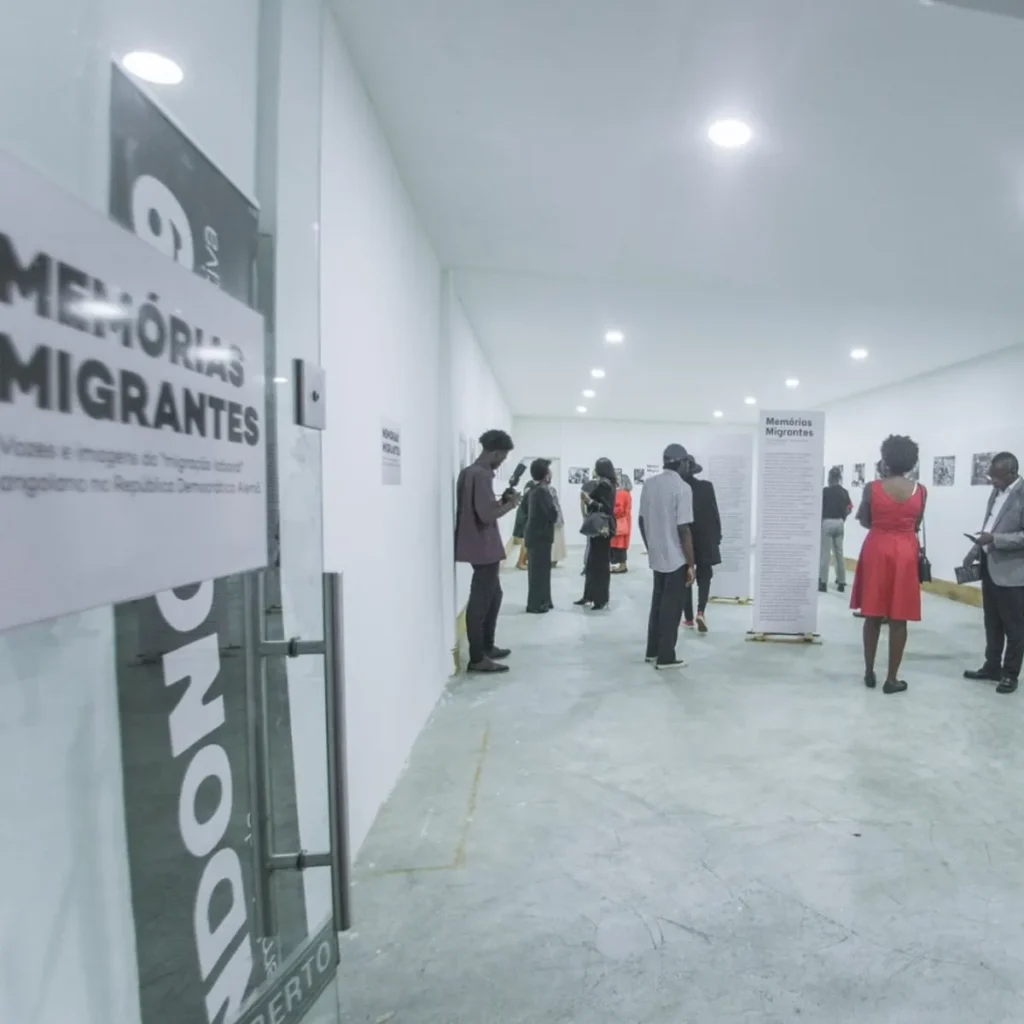
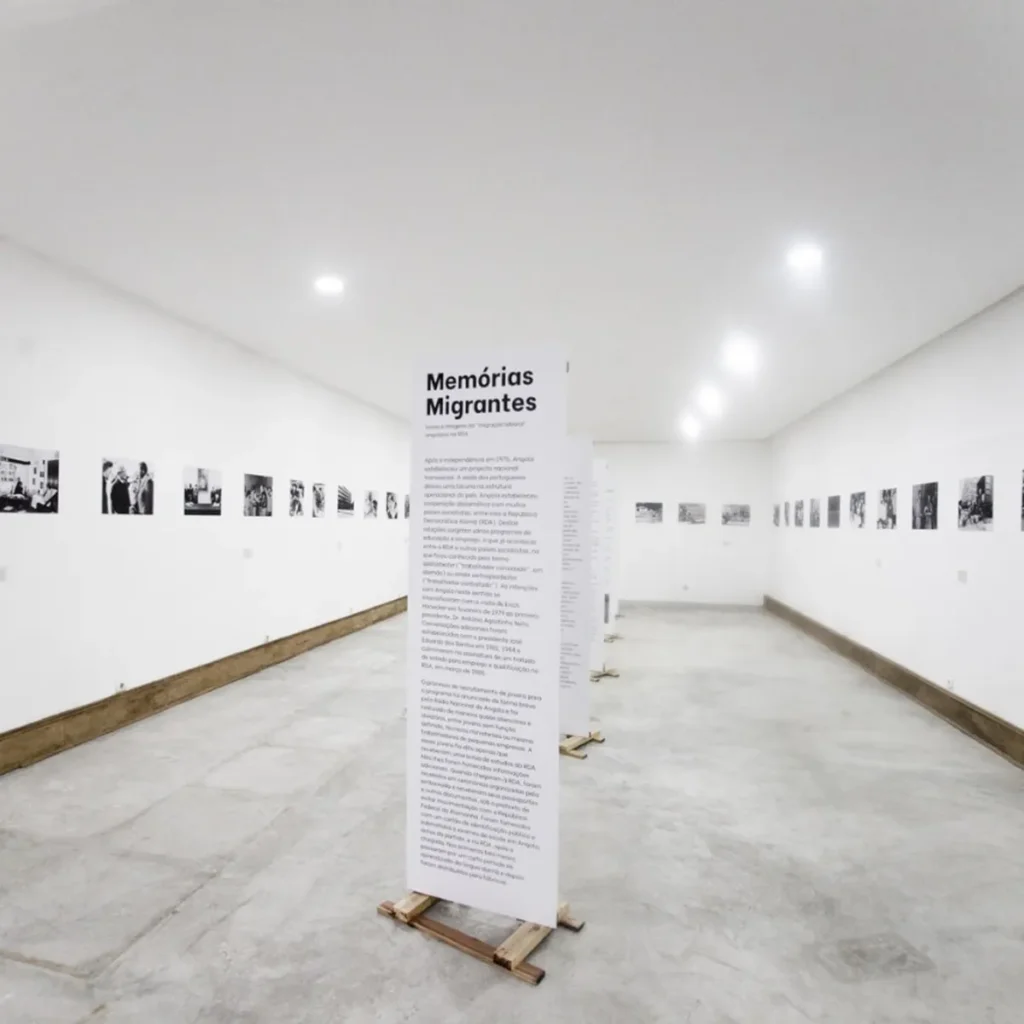
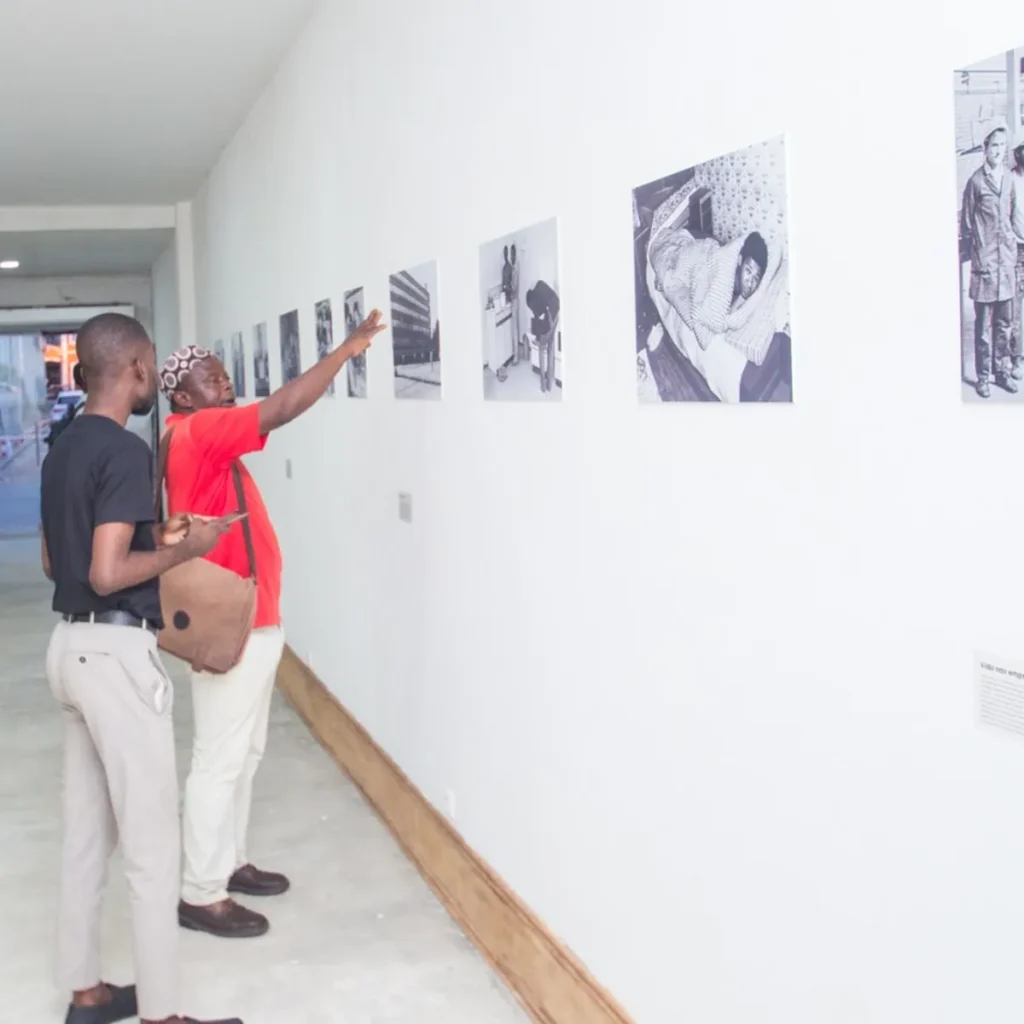
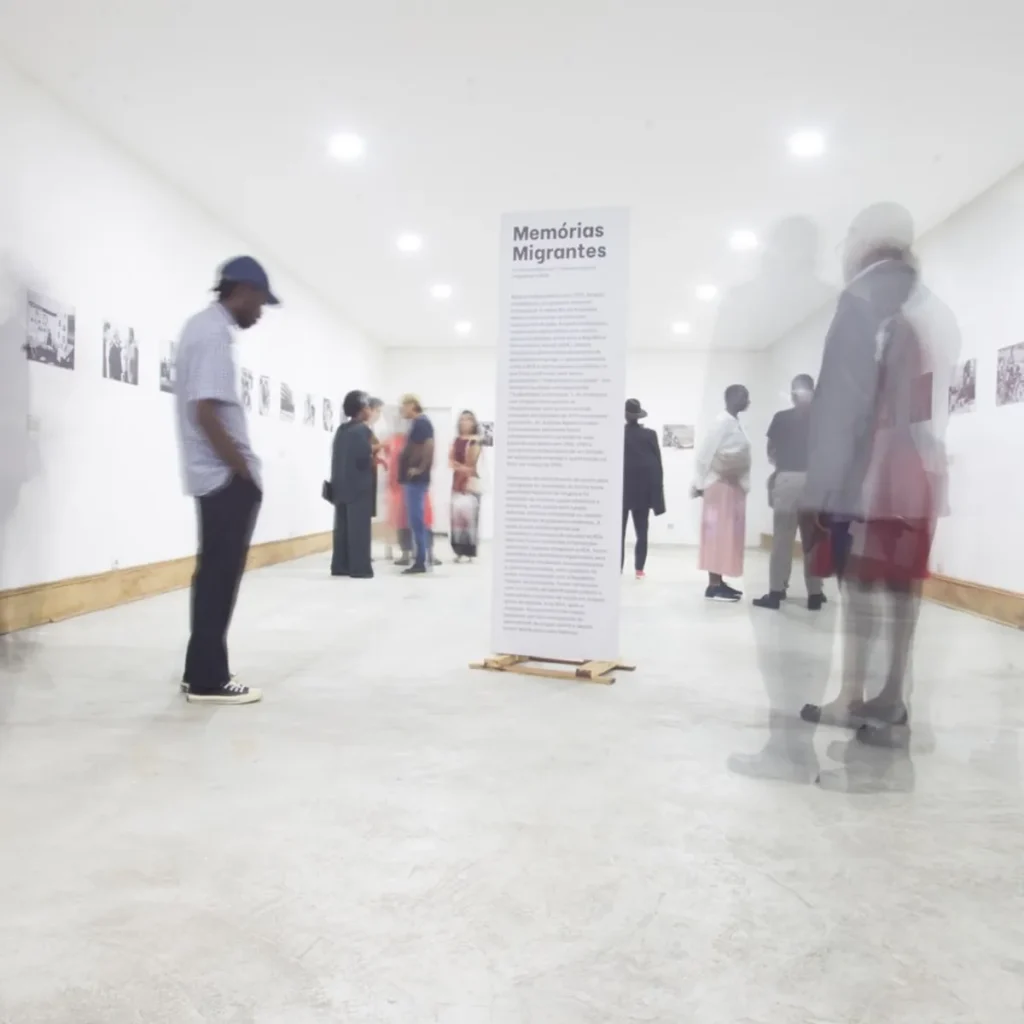
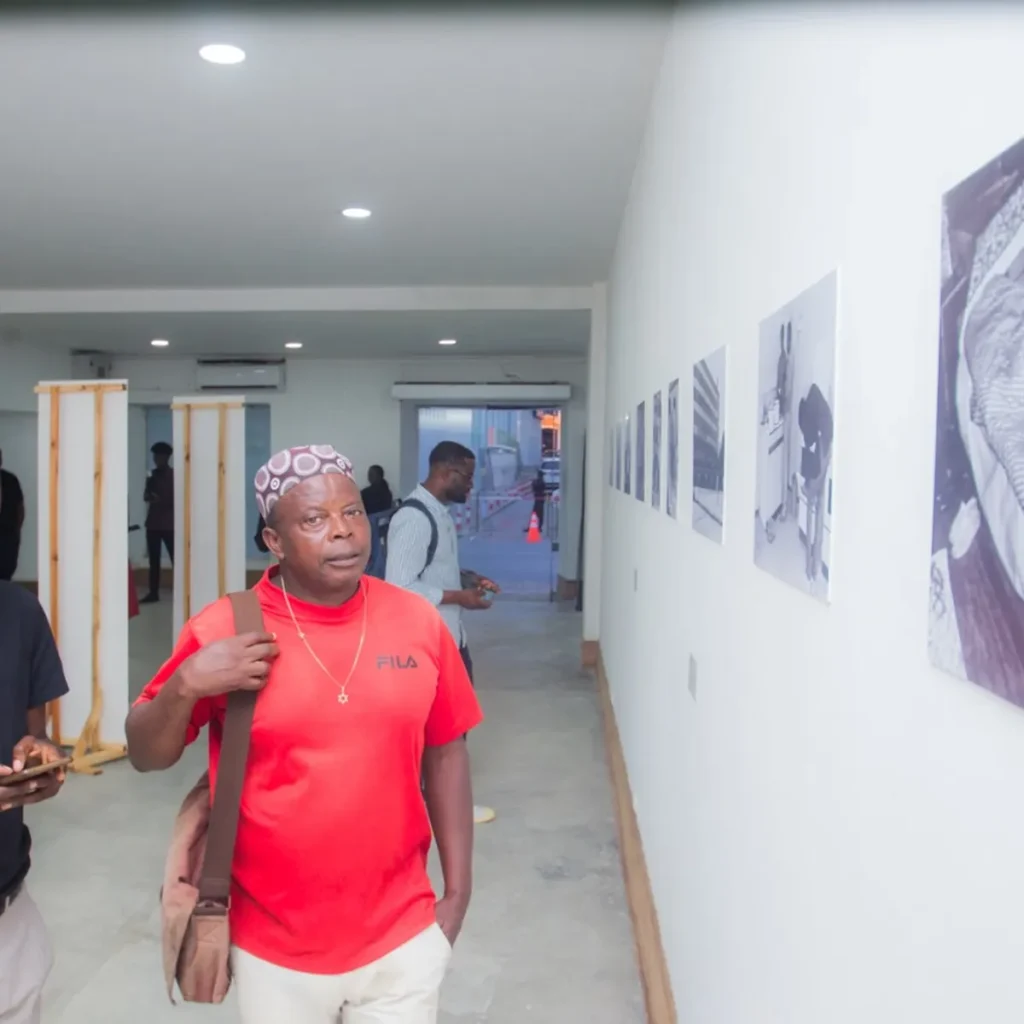
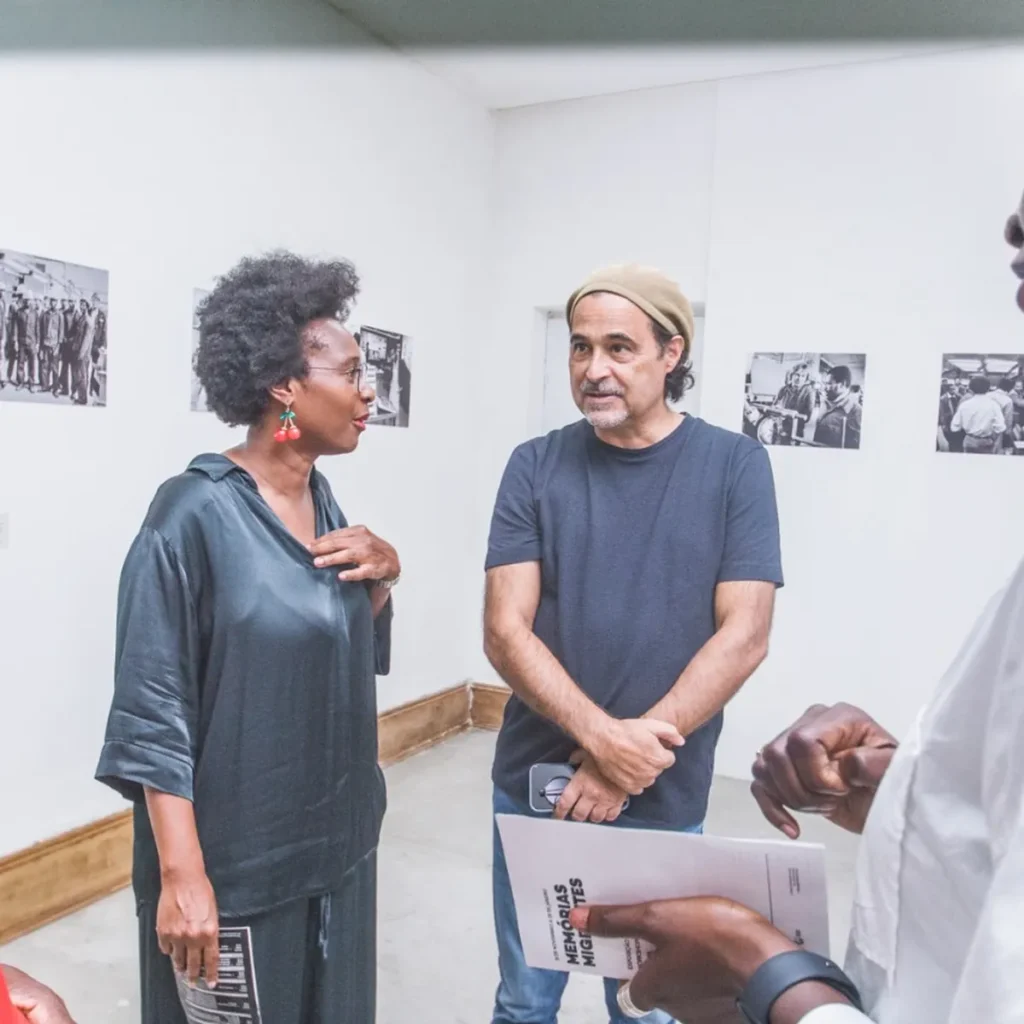


Memórias Migrantes in Luanda
(December 2023) The exhibition told the story of Angolan workers in the GDR. In Eberswalde, Angolans and Mozambicans lived in the same dormitory at Leninstraße 106 and 108. Fenger’s pictures show the Mozambicans from the rolling mill.
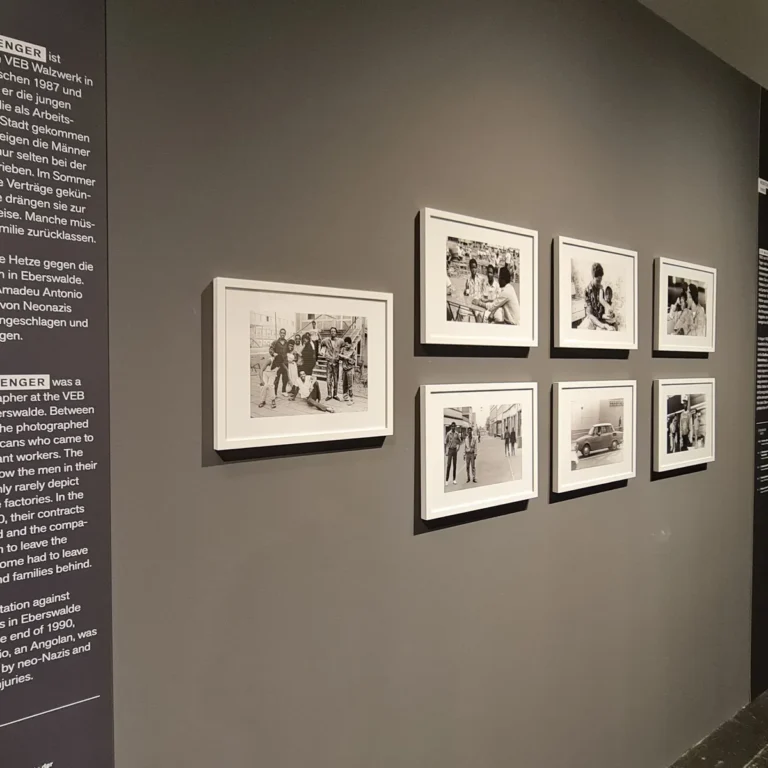
Das Weite suchen in Potsdam
(Potsdam, November 27, 2025, to March 22, 2026) The Brandenburg Museum showed Fenger’s photographs without the names of the people depicted. Only in April 2026 did someone in Maputo recognize Damas Orlando in one of the pictures.
Back in Eberswalde
In 1987 the first men from Mozambique came to the Eberswalde-Finow rolling mill. In 2027 that will be forty years ago. The photomontage shows where HUB 87 | 27 is heading: Christian Fenger’s pictures back in the urban space of Eberswalde, large and public, where they were taken.
Follow the trail
Every Wednesday in Maputo.
Maputo ↗
The Madgermanes from Eberswalde
Credits
Concept, project development and editing
Thomas Balzer
Research and interviews in Mozambique and Germany
Stélio Guibunda
Thomas Balzer
Camera
Stélio Guibunda
Norman Gäbler
Benjamin von Essen
Nils Woitschach
Thomas Balzer
Matthias Seldte
“Amadeu Antonio” (1992)
Georg Denzer
“Überleben in Eberswalde” (2000)
Bert Peschel
“Überleben in Eberswalde” (2000)
Assistant
Nils Woitschach
Web development and technical implementation
Arvid Misc, Thomas Balzer
Photography
Christian Fenger – historical photographs
Collection and archive
DOMiD, safekeeping of the entrusted original prints
With thanks for their support
Andreas Mroß
Arnaldo Soares Mendes
Augusto Jone Munjunga, Palanca EW
Bengü Kocatürk-Schuster, DOMiD
Dr. Britta Klöpfer, VG Bild-Kunst
Kordula Steinke
Mariia Kryvokhyzhyna, EW
Sibylle Hubatschek-Rahn, ZDF
Stélio Guibunda
Uta Ross
Amadeu Antonio (1992)
Written, directed and edited by Thomas Balzer
Camera: Matthias Seldte
Sound: Ed Cantu
Commissioning editor: Sibylle Hubatschek-Rahn
Broadcaster: ZDF, Das kleine Fernsehspiel
Base Camp Germany (2014)
Short film by Jason Byrne and Helge Elisabeth Zeitler
Filmed in Mozambique from 2010, released in 2014
Running time: [add]
Vimeo: [add link]
Überleben in Eberswalde (2000)
Written and directed by Thomas Balzer
Camera: Georg Denzer, Bert Peschel
Sound: Hendrik Büttner, Sören Salzer
Editing: Mathias Paduch
Sound mixing: Jörg Höhne
Narrator: Maria Gräfe
Production manager: Stefan Pahlke
Commissioning editors: Thomas Janssen · ZDF/3sat; Karin Rieppel · DIE ZEIT TV
Production: DIE ZEIT TV on behalf of ZDF/3sat